

Operation Process and Working Principle of Denitrizer Pneumatic Conveying
Denitrizer pneumatic conveying is a critical technology in modern industrial applications, particularly in power plants and other facilities that require efficient and reliable nitrogen oxide reduction. The process involves transporting powdered denitrizer (typically a catalyst or reagent used in selective catalytic reduction, SCR) through a system using air or other gases as the conveying medium. This method offers advantages such as reduced material handling costs, improved safety by minimizing dust exposure, and enhanced process control compared to traditional mechanical conveying methods.

Overview of Denitrizer Pneumatic Conveying Systems
A typical denitrizer pneumatic conveying system consists of several key components, including a hopper for storing the denitrizer powder, a conveyor line (often a pipeline), a blower or compressor to generate the conveying air, and a control system to regulate the flow and pressure. The system operates by feeding the denitrizer from the hopper into the conveyor line, where it is entrained by the high-velocity air stream. The air and powder mixture travels through the pipeline to the point of use, such as the injection point in a boiler or reactor. At the destination, the powder is separated from the air, usually through a cyclone or filter, and the air is then discharged or recirculated, depending on the system design.
Key Components and Their Functions
1. Hopper and Feeder: The hopper is designed to hold a large quantity of denitrizer powder and is equipped with a feeder mechanism (like a rotary valve or screw feeder) to control the flow rate of the material into the conveyor line. This component ensures a consistent and controlled supply of powder to maintain stable conveying conditions.
2. Conveying Pipeline: The pipeline is typically made of stainless steel or other corrosion-resistant materials to withstand the abrasive nature of the denitrizer powder and the effects of the conveying air. The pipeline is often equipped with bends, elbows, and other fittings that are designed to minimize pressure loss and maintain the air-powder mixture's velocity.
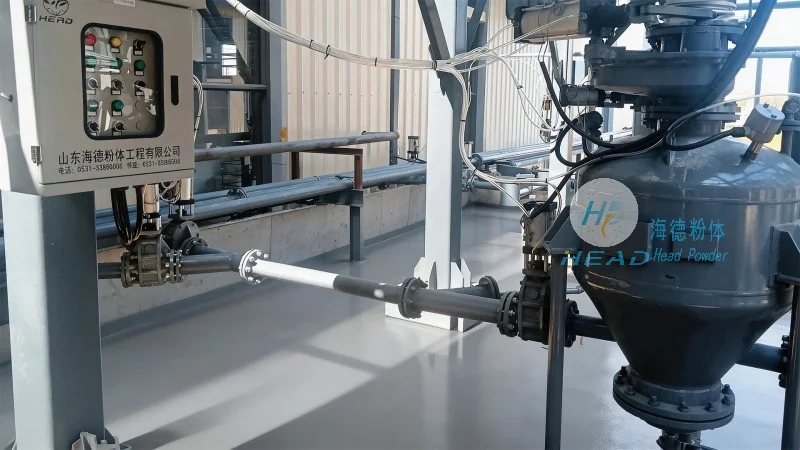
3. Blower or Compressor: This is the power source for the system, providing the necessary air pressure and volume to entrain the denitrizer powder. The choice of blower (centrifugal or positive displacement) depends on the system's capacity and the specific characteristics of the powder being conveyed.
4. Control System: The control system monitors and regulates various parameters, including air pressure, flow rate, and material feed rate. It ensures that the system operates within safe and efficient parameters, preventing issues such as blockages or excessive energy consumption.
Working Principle of Pneumatic Conveying
The core principle of pneumatic conveying is the use of air to transport solid particles. When the air is introduced into the pipeline at a high velocity, it creates a low-pressure zone that draws the denitrizer powder into the air stream. This process, known as "entrainment," allows the powder to be carried through the pipeline without the need for mechanical contact. The air-powder mixture travels at a velocity that is typically higher than the terminal velocity of the powder particles, ensuring that they remain suspended and do not settle out of the air stream.

There are two main types of pneumatic conveying systems based on the air flow direction relative to the material: dilute-phase and dense-phase. Dilute-phase systems operate at higher air velocities and lower material concentrations, making them suitable for long-distance or high-capacity conveying. Dense-phase systems, on the other hand, operate at lower velocities and higher material concentrations, which is beneficial for applications requiring gentle handling of the powder, such as when the denitrizer is sensitive to abrasion or degradation.
Operation Process of Denitrizer Pneumatic Conveying
The operation process of a denitrizer pneumatic conveying system can be broken down into several stages:

- Powder Loading: The denitrizer powder is loaded into the hopper from a bulk storage or a processing unit. The hopper is designed to prevent caking or bridging of the powder, which could disrupt the feeding process.
- Feeding and Entrainment: The feeder mechanism starts to discharge the powder into the conveyor line as the blower begins to operate. The high-velocity air from the blower entrains the powder particles, forming an air-powder mixture that moves through the pipeline.
- Transport and Delivery: The air-powder mixture travels through the pipeline to the injection point. The pipeline may include intermediate storage or mixing units if the denitrizer needs to be blended with other reagents before injection.
- Separation and Injection: At the injection point, the air and powder are separated. The powder is then injected into the flue gas stream of the boiler or reactor, where it reacts with nitrogen oxides to reduce their concentration. The air is typically filtered and discharged or recirculated to maintain system efficiency.
Advantages of Denitrizer Pneumatic Conveying
Denitrizer pneumatic conveying offers several advantages over traditional mechanical conveying methods:
- Efficiency and Cost-Effectiveness: By eliminating the need for mechanical components like conveyor belts or buckets, the system reduces maintenance costs and energy consumption. The ability to transport large quantities of powder over long distances with a single power source makes it highly efficient.
- Safety and Environmental Benefits: Pneumatic conveying minimizes dust exposure and the risk of material spillage, improving workplace safety. It also reduces the environmental impact by preventing dust emissions during handling.
- Process Control and Flexibility: The system allows for precise control over the flow rate and concentration of the denitrizer, ensuring consistent performance in the SCR process. It can be easily scaled up or down to meet changing operational requirements.
- Reduced Space Requirements: Compared to mechanical conveying systems, pneumatic conveying requires less floor space, making it suitable for facilities with limited room for equipment.
Applications in Industrial Settings
Denitrizer pneumatic conveying is widely used in power generation, chemical manufacturing, and other industries where selective catalytic reduction (SCR) is employed to reduce nitrogen oxide emissions. In power plants, the system is used to transport urea or other denitrizer powders to the injection points in the boiler, where they react with the flue gas to convert nitrogen oxides into harmless nitrogen and water. The efficiency of the pneumatic conveying system directly impacts the overall performance of the SCR system, making it a critical component in achieving compliance with environmental regulations.
About Shandong HeadPowder Engineering Co., Ltd.
Shandong HeadPowder Engineering Co., Ltd., commonly known as headpowder, is a leading provider of industrial powder handling solutions, including denitrizer pneumatic conveying systems. With a focus on innovation and customer satisfaction, the company designs and manufactures high-quality conveying systems tailored to the specific needs of its clients. Headpowder's expertise in material handling technology ensures that its systems are reliable, efficient, and compliant with industry standards. The company's headquarters is located in Shandong, China, where it leverages its local resources and expertise to serve a global customer base. By combining advanced engineering with practical application, headpowder helps industrial facilities optimize their denitrizer handling processes and meet their environmental and operational goals.