

Principle and Working Scene Characteristics of Silicate Powder Pneumatic Conveying Lines
HeadPowder, a leading provider in the field of material handling solutions, specializes in the design, manufacturing, and implementation of advanced pneumatic conveying systems for various industrial applications. This article delves into the fundamental principles of silicate powder pneumatic conveying lines and highlights the key characteristics of their operational scenarios, offering insights into how these systems efficiently transport silicate powders across different industrial environments.

Understanding the Core Principle of Silicate Powder Pneumatic Conveying
Pneumatic conveying systems utilize the force of compressed air or vacuum to transport bulk materials, such as silicate powders, through a pipeline network. The principle behind this technology is based on the interaction between the material particles and the air stream, enabling the powder to be suspended and propelled through the system. There are primarily two types of pneumatic conveying: positive pressure (or pressure) systems and negative pressure (or vacuum) systems. Positive pressure systems operate by blowing air into the conveying line, creating a pressure higher than the ambient air, which pushes the material forward. Negative pressure systems, on the other hand, create a vacuum at the receiving end, drawing the material into the line through suction. For silicate powders, which often have specific properties like high moisture content, abrasive nature, or varying particle sizes, the choice of system type and design parameters is critical to ensure efficient and reliable transport.

Key Components and Their Roles in Silicate Powder Pneumatic Conveying Lines
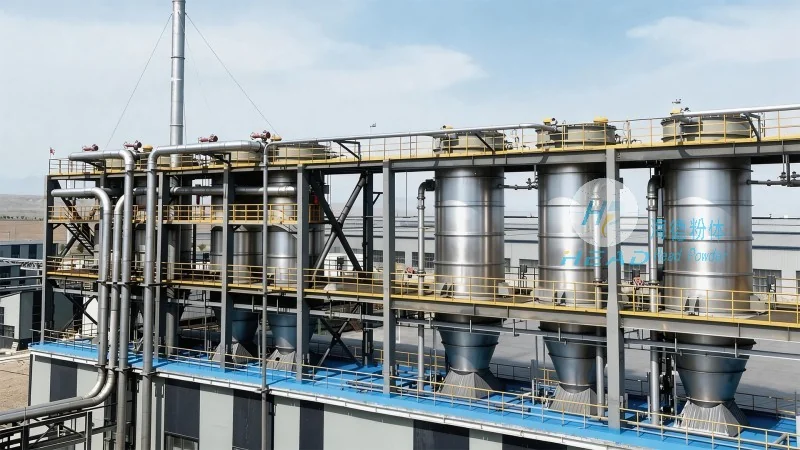
The effectiveness of a silicate powder pneumatic conveying line depends on the integration of several key components, each serving a specific function to facilitate the material's movement. The primary components include the material feed system, the conveying line itself, the air supply or vacuum generation unit, and the material discharge or collection equipment. The material feed system, such as a hopper or a rotary valve, ensures a consistent and controlled flow of silicate powder into the conveying line, preventing blockages and maintaining uniform particle distribution. The conveying line, typically made of materials like stainless steel or plastic, is designed to withstand the abrasive nature of silicate powders and the pressure or vacuum conditions. The air supply unit, which may include a blower or a vacuum pump, provides the necessary air flow to move the material. The discharge equipment, such as a cyclone separator or a bag filter, separates the silicate powder from the air stream, ensuring that the material is collected efficiently and the air is cleaned before release.
Operational Characteristics and Application Scenarios of Silicate Powder Pneumatic Conveying Lines
The operational characteristics of silicate powder pneumatic conveying lines are tailored to meet the specific demands of different industrial applications. These systems are commonly used in industries such as ceramics, glass, construction materials, and chemical processing, where silicate powders are a crucial raw material. The working scene characteristics include the ability to handle a wide range of particle sizes and moisture contents, the flexibility to transport materials over long distances, and the capacity to operate in both continuous and batch modes. For example, in ceramic production, silicate powders are often transported from storage silos to mixing and processing equipment, requiring systems that can handle high volumes and maintain product quality. In construction material manufacturing, the conveying lines may need to transport powders from raw material storage to production lines, ensuring a steady supply of materials for manufacturing processes. The characteristics also include the ability to integrate with other industrial processes, such as blending, drying, or packaging, to form a comprehensive material handling solution. Additionally, the systems are designed to minimize material degradation, dust emissions, and operational costs, making them a cost-effective and efficient solution for silicate powder transport in various industrial settings.
Advantages and Considerations for Silicate Powder Pneumatic Conveying Lines
Implementing silicate powder pneumatic conveying lines offers several advantages, including the ability to transport materials in a closed system, reducing dust emissions and environmental impact. The systems also provide flexibility in material handling, allowing for changes in production volume or material types without significant modifications. However, there are considerations to keep in mind when selecting and operating such systems. The abrasive nature of silicate powders can lead to wear and tear on the conveying line components, requiring regular maintenance and replacement of parts. The moisture content of the powder can affect the air flow and system efficiency, necessitating proper moisture control measures. Additionally, the system design must consider the specific properties of the silicate powder, such as particle size distribution, density, and flowability, to ensure optimal performance. HeadPowder, with its expertise in material handling solutions, offers customized pneumatic conveying systems that address these considerations, ensuring reliable and efficient operation for silicate powder transport in various industrial settings.