

Working Principle and Characteristics of Poultry Feather Material Pneumatic Conveying
HeadPowder, a leading engineering company based in Shandong, China, specializes in the design and implementation of pneumatic conveying systems for various industrial materials, including poultry feather materials. This article explores the fundamental working principles and key characteristics of pneumatic conveying systems specifically tailored for handling poultry feather materials, providing insights into how these systems efficiently transport such materials while maintaining operational efficiency and material integrity.

Overview of Pneumatic Conveying Systems for Poultry Feather Materials
Pneumatic conveying, also known as pneumatic transport, is a method used to move bulk materials through a pipeline using a gas stream, typically air. In the context of poultry feather materials, these systems are engineered to handle the unique properties of feathers, such as their lightweight, fibrous nature, and potential for static charge accumulation. The primary goal of pneumatic conveying for poultry feathers is to transport these materials from one location to another within a processing facility or between different stages of production without the need for mechanical components like belts or buckets.
The Working Principle of Pneumatic Conveying for Poultry Feather Materials
The core working principle of pneumatic conveying systems for poultry feather materials involves the creation of a pressure differential within a closed pipeline system. The process typically begins with the material being introduced into the conveying line, often via a hopper or feeder, where it is then mixed with a high-velocity air stream. This air stream, generated by a blower or fan, propels the feathers through the pipeline. The system can operate under either positive pressure (where the air pressure is higher than the ambient air pressure) or negative pressure (where the air pressure is lower than ambient), depending on the specific application and material characteristics.
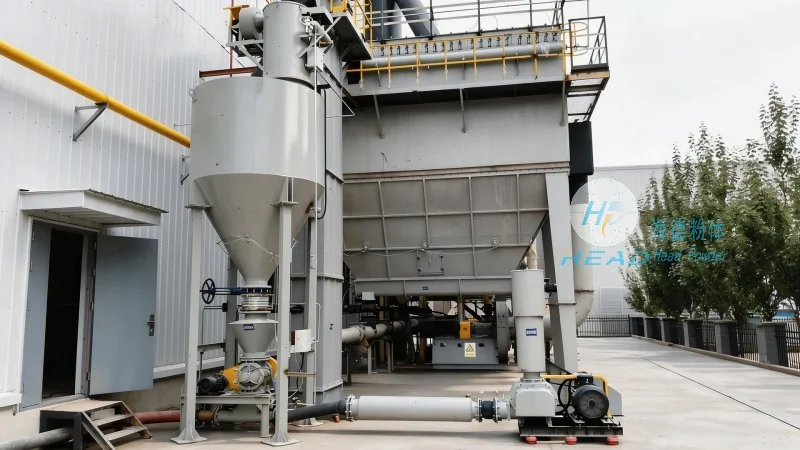
Key components of a pneumatic conveying system for poultry feathers include the feeder, which ensures a consistent material feed rate; the conveying line, which transports the feathers; the air supply system, which provides the necessary air pressure and flow; and the separation or collection equipment, which extracts the feathers from the air stream at the destination point. The feeder is crucial as it controls the amount of material entering the system, preventing overloading or underloading that could affect the conveying efficiency. The conveying line is designed to minimize friction and pressure loss, often using smooth, corrosion-resistant materials to accommodate the fibrous nature of feathers and prevent clogging.

Key Characteristics of Pneumatic Conveying for Poultry Feather Materials
Several distinct characteristics define pneumatic conveying systems used for poultry feather materials, making them suitable for various industrial applications. One of the most significant advantages is the ability to handle materials that are difficult to transport using traditional methods, such as those with high moisture content or those that tend to clump together. Pneumatic systems can also maintain a consistent material flow rate, which is essential for maintaining production efficiency in processing facilities.
Another important characteristic is the system's ability to minimize material degradation. By using a controlled air stream and avoiding mechanical contact, the feathers are less likely to be damaged or broken during transport. This is particularly critical in feather processing, where maintaining the integrity of the feathers is vital for downstream applications, such as feather meal production or further processing into other products. Additionally, pneumatic conveying systems can be designed to handle materials with varying particle sizes and shapes, making them versatile for different feather processing stages.
Operational Advantages and Considerations for Pneumatic Conveying of Poultry Feathers
Implementing pneumatic conveying systems for poultry feather materials offers several operational advantages. These systems are generally more compact than traditional mechanical conveying systems, allowing for easier integration into existing processing facilities. They also provide a cleaner and more hygienic method of material transport, which is essential in food processing environments where feather materials may be used in animal feed or other food-related products. Furthermore, pneumatic conveying systems can be easily scaled to accommodate varying production volumes, making them adaptable to changing production needs.
However, there are also considerations to keep in mind when using pneumatic conveying for poultry feathers. One of the main challenges is managing the potential for static charge buildup, as feathers are often insulating materials. This can lead to issues such as material sticking to the pipeline walls or causing electrical hazards. To mitigate this, anti-static measures, such as grounding the system or using conductive materials, are typically incorporated into the design. Another consideration is the need for regular maintenance and cleaning of the conveying line and air filtration systems to prevent clogging and ensure consistent performance.
Conclusion: The Role of Pneumatic Conveying in Poultry Feather Processing
Pneumatic conveying systems, as developed and implemented by companies like Shandong HeadPowder Engineering Co., Ltd., play a crucial role in the efficient and effective processing of poultry feather materials. By leveraging the principles of pneumatic transport, these systems enable the seamless movement of feathers through various stages of production, from collection to final processing. The advantages in terms of efficiency, material integrity, and operational flexibility make pneumatic conveying an ideal solution for industries dealing with poultry feather materials. As technology continues to advance, these systems will likely become even more sophisticated, further enhancing their role in sustainable and efficient feather processing.