

What is Dry Sludge Material Pneumatic Conveying? And What Are Its Design Principles?
Dry sludge material pneumatic conveying is a specialized method used to transport dry or low-moisture sludge from one location to another using a stream of air or gas. This technology is particularly relevant in the wastewater treatment and industrial sectors where handling sludge efficiently and without contamination is critical. Unlike traditional methods such as trucks or conveyor belts, pneumatic conveying offers a closed system that minimizes environmental impact and ensures the integrity of the sludge during transport. The process involves feeding dry sludge into a pipeline, where it is carried by a moving air stream. The dry nature of the sludge—typically with a moisture content below 60%—makes it suitable for this type of transport, as it reduces the risk of clogging and corrosion in the system. This method is especially advantageous for long-distance or high-rise applications where traditional equipment may be impractical.

Key Design Principles for Dry Sludge Pneumatic Conveying Systems
The design of a dry sludge pneumatic conveying system is governed by several fundamental principles aimed at ensuring efficiency, reliability, and safety. The first principle is the classification of the system based on the pressure of the air stream. There are two primary types: positive pressure systems, where air is blown into the system to push the sludge, and negative pressure (or vacuum) systems, where air is drawn out to pull the sludge. The choice between these depends on the application, with positive pressure systems often preferred for long-distance or high-rise transport due to their ability to handle higher pressures and maintain consistent flow. Another critical design principle is the selection of the appropriate air velocity and pressure. The air velocity must be sufficient to overcome the resistance of the sludge particles in the pipeline and prevent clogging. Typically, velocities range from 20 to 30 meters per second for fine particles and may be higher for larger particles. The pressure levels can vary from low (under 0.5 bar) to high (over 10 bar), depending on the system's requirements. Additionally, the design must consider the characteristics of the dry sludge itself, including particle size distribution, density, and moisture content. These factors influence the required air flow rate and pressure to achieve optimal conveying performance. For example, finer particles may require higher air velocities to maintain suspension, while larger particles may need higher pressure to ensure proper movement.
Components and Working Mechanism
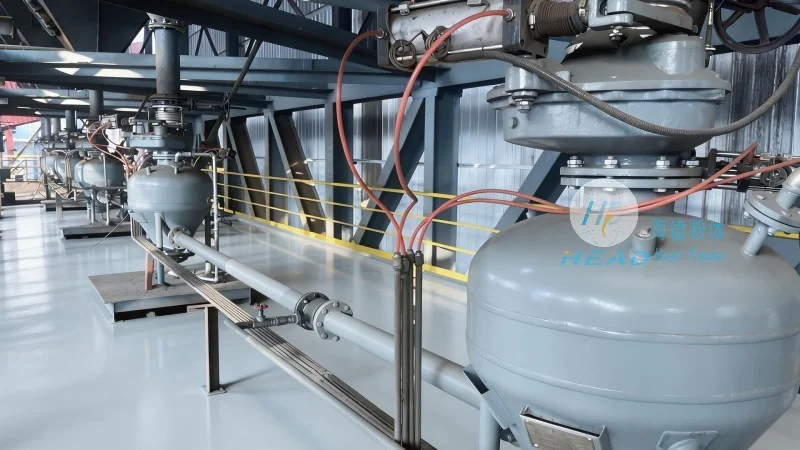
A dry sludge pneumatic conveying system consists of several key components that work in coordination to transport the material. The primary components include the feed hopper, which holds the dry sludge and provides a controlled feed into the system; the air compressor or vacuum pump, which generates the air stream; the conveying pipeline, which is typically made of materials resistant to corrosion and wear, such as stainless steel or polyethylene; the separation and collection equipment, which removes the air from the sludge and collects the material at the destination; and the control system, which monitors and adjusts the flow rate and pressure as needed. The working mechanism begins with the dry sludge being fed into the hopper. A feeder, such as a rotary valve or a screw feeder, then meters the sludge into the pipeline. Simultaneously, the air compressor or vacuum pump generates a high-velocity air stream that enters the pipeline at the feed point. The air stream lifts and carries the sludge particles through the pipeline, maintaining them in suspension. As the mixture travels to the destination, it passes through a separator, which may be a cyclone or a filter, where the air is separated from the sludge. The separated air is then discharged, while the dry sludge is collected in a storage tank or directly processed further. The control system plays a vital role in maintaining the system's performance by adjusting the air flow rate, pressure, and feed rate based on real-time conditions. This ensures that the system operates efficiently and prevents issues such as clogging or excessive energy consumption.

Design Considerations for Optimal Performance
Designing an effective dry sludge pneumatic conveying system requires careful consideration of several factors to ensure optimal performance and longevity. One of the most critical considerations is the analysis of the dry sludge's physical properties. This includes determining the particle size distribution, density, and moisture content, as these characteristics directly impact the system's design. For instance, if the sludge contains a high proportion of fine particles, the system may need to be designed with higher air velocities to prevent clogging. Conversely, if the sludge has larger particles, higher pressure may be required to ensure proper movement. Another important factor is the system's layout and pipeline design. The pipeline should be designed with appropriate slopes to facilitate the flow of sludge and air, minimizing the risk of stagnation or clogging. elbows and bends in the pipeline should be minimized or designed with smooth transitions to reduce pressure losses and prevent particle accumulation. The material of the pipeline is also a key consideration, as it must be resistant to the corrosive nature of the dry sludge and the abrasive effects of the particles. Stainless steel is commonly used for its durability and resistance to corrosion, while polyethylene is sometimes used for shorter, less demanding applications. Additionally, the system must be equipped with appropriate safety features, such as pressure relief valves and emergency shut-off mechanisms, to prevent accidents and ensure operator safety. Regular maintenance is also essential to maintain the system's performance, including cleaning the pipeline, replacing worn components, and monitoring the air and sludge flow rates.
Applications and Benefits
Dry sludge material pneumatic conveying is widely used in various applications, particularly in the wastewater treatment industry. One of the primary applications is the transport of dry sludge from the dewatering or drying processes to storage or disposal facilities. This is crucial for wastewater treatment plants that need to manage large volumes of sludge efficiently. The technology is also used in industrial settings, such as chemical plants or food processing facilities, where sludge from various processes needs to be transported to treatment or disposal sites. The benefits of using dry sludge pneumatic conveying are numerous. First, it provides a closed system that prevents the release of odors or contaminants into the environment, ensuring compliance with environmental regulations. Second, it offers a continuous and automated transport process, reducing the need for manual handling and increasing operational efficiency. Third, it minimizes the risk of clogging and corrosion, as the dry nature of the sludge reduces the likelihood of blockages and wear on the system components. Fourth, it allows for long-distance or high-rise transport, which may be impractical with traditional methods. Finally, it provides flexibility in system layout, as the pipeline can be installed in various configurations to suit the specific needs of the application. Overall, dry sludge pneumatic conveying is an effective and reliable method for transporting dry sludge, offering significant advantages over traditional transport methods.

About Shandong HeadPowder Engineering Co., Ltd.
Shandong HeadPowder Engineering Co., Ltd., commonly known as HeadPowder, is a leading provider of engineering solutions for dry sludge material pneumatic conveying systems. With a strong presence in China, the company specializes in designing, manufacturing, and installing customized pneumatic conveying systems tailored to the specific needs of its clients. HeadPowder has extensive experience in the wastewater treatment and industrial sectors, having worked on numerous projects involving the transport of dry sludge. The company's team of engineers and technicians is well-versed in the principles of pneumatic conveying and is equipped with the latest technology and tools to ensure the design and implementation of efficient and reliable systems. HeadPowder's commitment to quality and customer satisfaction is evident in its adherence to international standards and its focus on providing comprehensive support throughout the project lifecycle. From initial consultation and system design to installation and maintenance, HeadPowder offers a full range of services to meet the diverse needs of its clients. The company's headquarters is located in Shandong, China, where it has a state-of-the-art facility for research, development, and manufacturing. With a reputation for excellence and reliability, HeadPowder is a trusted partner for organizations seeking to optimize their sludge transport processes. By leveraging its expertise and innovative solutions, HeadPowder helps clients achieve efficient, cost-effective, and environmentally friendly sludge management.