

What is Caustic Soda Material Pneumatic Conveying? And What Are the Design Principles?
Caustic soda, also known as sodium hydroxide (NaOH), is a highly caustic and reactive chemical widely used in various industrial processes, including chemical manufacturing, water treatment, and pulp and paper production. The efficient and safe handling of caustic soda materials is crucial for industrial operations, and pneumatic conveying systems have emerged as a reliable solution for transporting these materials from one location to another within a facility. This article explores the concept of caustic soda material pneumatic conveying and delves into the fundamental design principles that underpin such systems.

Understanding Pneumatic Conveying for Caustic Soda
Pneumatic conveying is a method of transporting bulk materials through a pipeline using a stream of air or other gas. In the context of caustic soda, this technology is particularly valuable due to the material's corrosive nature and the need for enclosed, controlled environments to prevent exposure and contamination. The process involves feeding the caustic soda material into a hopper or feeder, which then releases the material into a pipeline where it is carried by a high-velocity air stream. The air flow can be either positive pressure (where air is blown into the pipeline) or negative pressure (where air is drawn out of the pipeline), depending on the system design and the distance the material needs to travel.
Key Design Principles for Caustic Soda Pneumatic Conveying Systems
The design of a caustic soda pneumatic conveying system must consider several critical factors to ensure optimal performance, safety, and durability. First, material properties play a significant role. Caustic soda is a fine or granular powder that can be abrasive and corrosive to equipment. Therefore, the system components, such as hoppers, feeders, and pipelines, must be constructed from materials that can withstand the chemical's effects, typically stainless steel or specialized corrosion-resistant alloys. Second, the system must be designed to handle the material's flow characteristics, including its density, particle size distribution, and moisture content. Proper feeding mechanisms, such as rotary valves or screw feeders, are essential to maintain a consistent flow rate and prevent blockages or uneven material distribution.

System Components and Their Functions
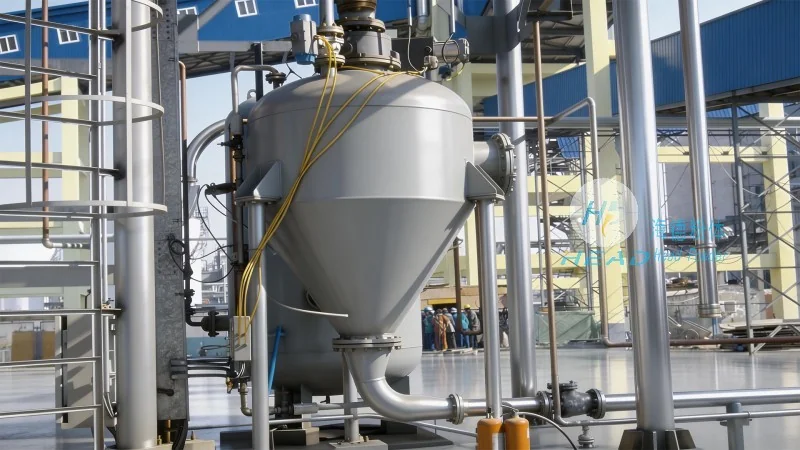
A typical caustic soda pneumatic conveying system consists of several key components, each with a specific function. The primary components include a material hopper, a feeder (often a rotary airlock or screw feeder), a pipeline system, a venturi or airlock for material discharge, and a dust collection or filtration system. The material hopper serves as a storage container, providing a buffer to ensure a continuous supply of caustic soda to the feeder. The feeder is responsible for controlling the flow rate of the material into the pipeline, preventing overloading and ensuring a steady stream. The pipeline is the conduit through which the material and air travel, and its diameter and length are carefully selected based on the material's properties and the required conveying distance. The venturi or airlock at the discharge end separates the material from the air stream, allowing the caustic soda to be deposited into the receiving container while the air is recirculated or discharged through a filtration system.
Advantages of Pneumatic Conveying for Caustic Soda Handling
Implementing a pneumatic conveying system for caustic soda offers several advantages over traditional methods like bucket elevators or belt conveyors. One of the most significant benefits is the enclosed and dust-free operation, which minimizes exposure to the caustic material and reduces the risk of environmental contamination. This is particularly important for caustic soda, which can cause severe skin and eye irritation if not handled properly. Additionally, pneumatic conveying systems can handle materials over long distances with minimal loss, making them suitable for large-scale industrial applications. The flexibility of the system allows for easy integration with existing production lines and can be adapted to accommodate changes in material flow rates or processing requirements. Furthermore, the system's ability to operate in a closed loop with air recirculation reduces energy consumption compared to systems that require continuous air intake from the environment.

Considerations for System Maintenance and Safety
While pneumatic conveying systems offer many benefits, proper maintenance and safety measures are essential to ensure their longevity and safe operation. Regular inspection and maintenance of system components, such as hoppers, feeders, and pipelines, are necessary to detect and address any signs of wear, corrosion, or blockages. The use of high-quality materials and components, as recommended by manufacturers like Shandong HeadPowder Engineering Co., Ltd., based in China, is crucial for extending the system's lifespan and maintaining its performance. Safety protocols must also be strictly followed, including proper personal protective equipment (PPE) for operators, regular monitoring of air quality and material levels, and emergency shutdown procedures in case of system failures or material spills. Shandong HeadPowder Engineering Co., Ltd., with its headquarters in Shandong, China, specializes in designing and manufacturing customized pneumatic conveying systems tailored to the specific needs of caustic soda handling applications, ensuring that clients receive reliable and efficient solutions for their material transport requirements.