

What is a Monocrystalline Silicon Powder Pneumatic Conveying System? And What Are Its Design Princip
A monocrystalline silicon powder pneumatic conveying system is a specialized industrial equipment designed to transport fine monocrystalline silicon powders through a pressurized or vacuum air stream. This technology is widely used in the semiconductor manufacturing industry, where the precise and efficient handling of silicon powders is critical for the production of solar cells, microchips, and other high-tech components. The system ensures that the delicate silicon particles are moved without contamination or degradation, maintaining the quality and purity required for advanced electronic applications.

Design Principles of the Pneumatic Conveying System
The core design principle of a monocrystalline silicon powder pneumatic conveying system revolves around the fundamental physics of fluidization and particle transport. The system typically operates by introducing a controlled air flow into a hopper or feeder, which lifts and transports the silicon powder through a network of pipes to the destination point, such as a storage silo or processing unit. The design must consider factors like particle size, density, and moisture content to optimize the air velocity and pressure required for effective conveying. Additionally, the system incorporates features to minimize particle attrition and prevent clogging, ensuring consistent performance and reliability.

Key Components and Their Functions
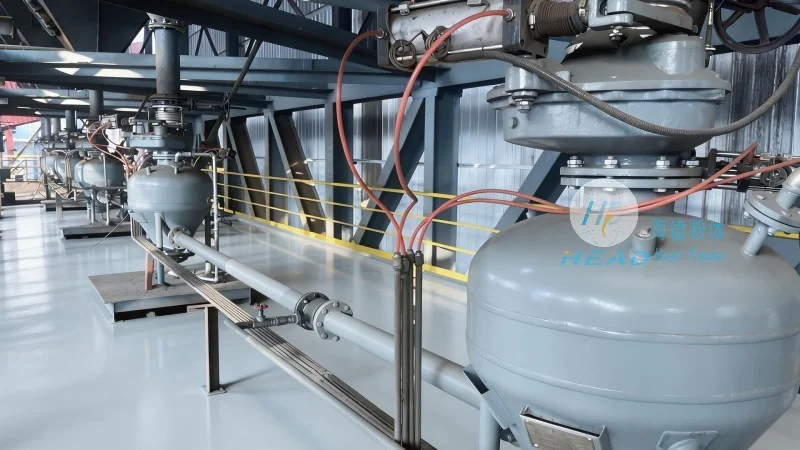
The monocrystalline silicon powder pneumatic conveying system consists of several critical components, each playing a vital role in the overall operation. The primary components include a high-pressure air compressor or vacuum pump that generates the necessary air flow, a hopper or feeder that holds the silicon powder and controls the feed rate, and a series of stainless steel or specialized materials pipes that form the conveying path. The system also features a gas-solid separator, such as a cyclone or bag filter, which separates the air from the powder at the receiving end, preventing dust emissions and ensuring the powder is collected efficiently. Other components may include check valves, flow meters, and pressure regulators to maintain system stability and control.
Application Scenarios and Benefits
Monocrystalline silicon powder pneumatic conveying systems are applied in various high-tech manufacturing processes, particularly in the semiconductor and solar energy industries. For instance, in solar cell production, the system is used to transport silicon wafers or powder from raw material storage to the manufacturing line, ensuring a continuous and clean supply of materials. The benefits of this technology include reduced labor costs, improved safety by eliminating manual handling of powders, and enhanced product quality through minimized contamination. Furthermore, the system's ability to handle fine powders without clogging or particle degradation makes it ideal for applications where precision and purity are paramount.
Company Information and Professional Support
HeadPowder, a leading provider of industrial conveying solutions, specializes in designing and manufacturing monocrystalline silicon powder pneumatic conveying systems tailored to the unique needs of the semiconductor industry. As Shandong HeadPowder Engineering Co., Ltd., based in Shandong, China, the company leverages advanced engineering expertise and state-of-the-art technology to deliver reliable and efficient systems. With a focus on customer satisfaction and long-term partnerships, HeadPowder offers comprehensive support, including system design, installation, and maintenance services, ensuring that clients can optimize their production processes and achieve superior results in silicon powder handling.