

What is an Oat Powder Pneumatic Conveying System? And What Are Its Design Principles?
HeadPowder, a leading engineering company based in Shandong, China, specializes in the design and implementation of advanced pneumatic conveying systems for various powder materials, including oat powder. This article provides an in-depth overview of what a pneumatic conveying system for oat powder entails and the fundamental design principles that govern its operation.
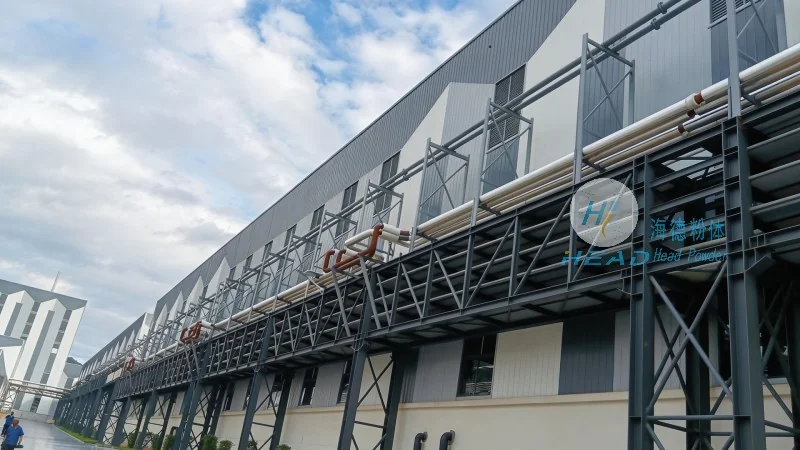
Pneumatic conveying systems are a critical component in the processing and handling of bulk powders, offering a efficient and reliable method to transport materials from one location to another without the need for mechanical components like belts or screws. For oat powder, which is commonly used in food and beverage industries, such systems are essential for maintaining product quality, ensuring consistent flow rates, and minimizing contamination risks.
Core Components and Functionality
The core of an oat powder pneumatic conveying system lies in its ability to use air or gas as the medium to transport the powder particles. This is achieved through a combination of components that work in tandem to create a controlled flow of material. The system typically includes a hopper for material storage, a feeder to regulate the flow of powder into the system, a conveying line (often equipped with pressure vessels or ducts), and a receiver for the discharged material. Additionally, auxiliary components such as filters, cyclones, and pressure regulators are integrated to ensure optimal performance and safety.

Design Principles: Conveying Method Selection
One of the key design principles is the selection of the appropriate conveying method, which can be categorized into two main types: dilute-phase and dense-phase. Dilute-phase systems operate at higher velocities, typically using low-pressure air to move the powder, making them suitable for long-distance or high-capacity applications. Dense-phase systems, on the other hand, use higher pressure and lower velocities, which are ideal for handling sensitive materials like oat powder that require minimal particle breakage and reduced product degradation. The choice between these methods depends on factors such as the material's properties, the distance to be conveyed, and the desired flow rate.
Air Volume and Pressure Calculations
Another critical design principle is the calculation of the required air volume and pressure. This involves determining the specific gravity of the oat powder, the particle size distribution, and the system's overall resistance to flow. Engineers at HeadPowder use sophisticated software and empirical formulas to calculate these parameters accurately, ensuring that the system operates efficiently without excessive energy consumption or pressure drops. Proper sizing of the conveying line diameter and the selection of suitable valves and fittings are also crucial to maintain consistent flow and prevent blockages.

Control and Monitoring Systems
The system's control and monitoring mechanisms are another important aspect of its design. Modern pneumatic conveying systems are equipped with sensors and control panels that allow operators to monitor pressure, flow rate, and material levels in real-time. This enables immediate adjustments to be made in response to changes in the system's performance or material characteristics. For oat powder, which may vary in moisture content or particle size, such monitoring is essential to maintain product quality and prevent system inefficiencies.

Environmental and Safety Considerations
Furthermore, the design of the system must consider the environmental and safety aspects. Oat powder is a food-grade material, and thus, the system must be constructed from materials that are non-toxic, corrosion-resistant, and easy to clean. Stainless steel is commonly used for the conveying line and components to ensure hygiene and durability. Additionally, the system is equipped with safety features such as pressure relief valves and explosion-proof designs to prevent accidents and protect the surrounding environment.
Conclusion
In conclusion, an oat powder pneumatic conveying system is a sophisticated piece of equipment that combines engineering principles with material science to efficiently transport oat powder. The design principles, including the selection of conveying method, air volume and pressure calculations, and control mechanisms, are critical to ensuring the system's performance, reliability, and safety. As a leading provider in the industry, HeadPowder leverages its expertise to design and implement customized pneumatic conveying systems that meet the specific needs of its clients, ensuring optimal performance and product quality.