

What is an Alloy Powder Material Handling Conveyor? And What Are Its Design Principles?
Alloy powder material handling conveyors are specialized systems engineered to transport and manage alloy powders efficiently and safely. These systems are critical in industries where alloy powders are used, such as aerospace, automotive, and manufacturing sectors. The design of these conveyors is tailored to address the unique challenges posed by alloy powders, including their fine particle size, potential for static electricity, and the need for precise control during handling.

Understanding Alloy Powder Material Handling Conveyors
At the core of an alloy powder material handling conveyor is a system designed to handle the specific properties of alloy powders. Alloy powders are often used in additive manufacturing, metal injection molding, and other processes where uniform distribution and minimal contamination are essential. The conveyor systems must ensure that the powder is moved without agglomeration, which can affect the quality of the final product. This requires careful consideration of the material's flow characteristics and the mechanical design of the conveyor components.
Key Design Principles for Alloy Powder Conveyors
The design of an alloy powder material handling conveyor is guided by several fundamental principles to ensure optimal performance. First, the system must prevent the buildup of static electricity, which can attract dust and cause sparks in environments where flammable materials are present. This is typically achieved through grounding mechanisms and the use of conductive materials in the conveyor components. Second, the conveyor must maintain a consistent flow rate to avoid overloading or underloading the processing equipment downstream. This is managed through adjustable speed controls and flow sensors that monitor the powder level in real-time.
Third, the design emphasizes the prevention of powder segregation and contamination. Alloy powders are often mixed with other materials or additives, and the conveyor must ensure that these components remain well-mixed throughout the transport process. This is achieved through the use of mixing sections, such as helical or vibratory conveyors, that maintain a homogeneous mixture. Additionally, the conveyor's construction materials are chosen to be non-reactive with the alloy powders, preventing any chemical reactions that could alter the powder's properties.

Components of an Alloy Powder Material Handling Conveyor
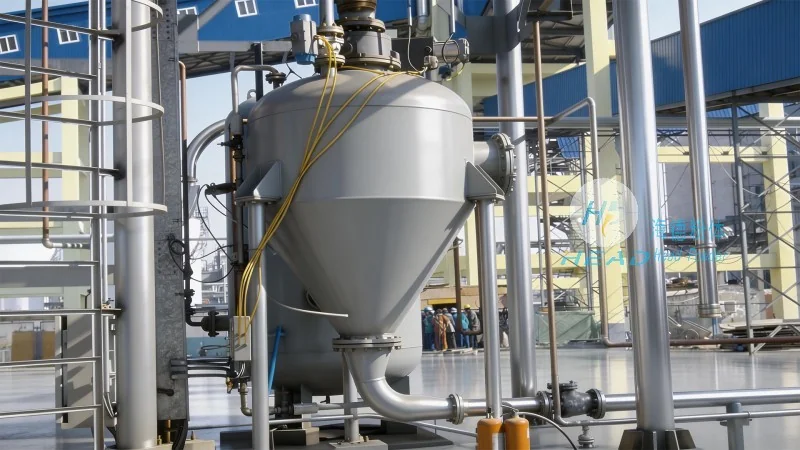
An alloy powder material handling conveyor typically consists of several key components that work together to achieve efficient material transport. The primary components include a feeding mechanism, a conveying section, a control system, and a discharge unit. The feeding mechanism is responsible for introducing the alloy powder into the conveyor system, often using a hopper or a rotary valve to regulate the flow. The conveying section may include different types of conveyors, such as screw conveyors, belt conveyors, or pneumatic systems, depending on the specific requirements of the application. The control system monitors and adjusts the conveyor's operation based on real-time data from sensors, ensuring that the flow rate and other parameters remain within optimal ranges. The discharge unit then delivers the alloy powder to the next stage of the production process, such as a mixer or a processing machine.

Applications and Benefits of Alloy Powder Conveyors
Alloy powder material handling conveyors are widely used in various industrial applications where the efficient and safe transport of alloy powders is critical. In the aerospace industry, these conveyors are used to transport titanium and other high-performance alloy powders for additive manufacturing, ensuring that the powders are delivered to the 3D printers with the right consistency and purity. In the automotive industry, they are used in metal injection molding processes, where the conveyor ensures that the alloy powders are mixed with the polymer correctly, leading to stronger and more durable parts. The benefits of using these specialized conveyors include improved production efficiency, reduced material waste, and enhanced product quality. By maintaining the integrity of the alloy powders throughout the transport process, these systems help manufacturers achieve higher yields and lower costs.
Conclusion
In summary, alloy powder material handling conveyors are sophisticated systems designed to handle the unique challenges of alloy powders in industrial applications. Their design is guided by principles that address issues such as static electricity, flow control, and contamination prevention. The components of these conveyors work together to ensure efficient and safe transport of alloy powders, which is essential for the success of modern manufacturing processes. As industries continue to rely on alloy powders for advanced products, the importance of these specialized conveyor systems will only grow, making them a critical component of modern production lines.