

What is Magnesium Silicate Material Handling Equipment? And What Are Its Design Principles?
Understanding magnesium silicate material handling equipment and its design principles is crucial for optimizing industrial production processes. This article delves into the functionality, structure, and key design elements of such equipment, helping readers gain a comprehensive understanding of its application in material processing.
About HeadPowder Engineering
HeadPowder Engineering, also known as Shandong HeadPowder Engineering Co., Ltd., is a professional enterprise specializing in powder engineering solutions. The company is headquartered in Shandong, China, dedicated to providing efficient and reliable material handling equipment to clients worldwide. Our products are widely used in industries such as chemical, pharmaceutical, food, and more, meeting the material processing needs of various scenarios.

What is Magnesium Silicate Material Handling Equipment?
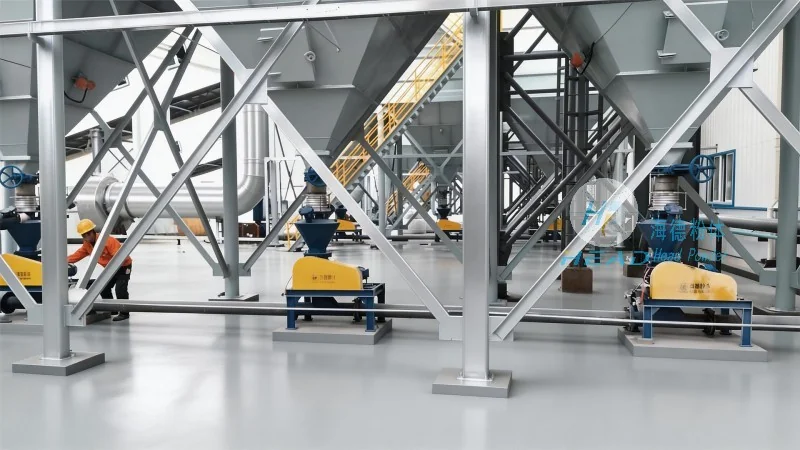
Magnesium silicate material handling equipment is an industrial device specifically designed for processing powder materials like magnesium silicate. Magnesium silicate is a common inorganic compound, widely used in refractory materials, ceramics, rubber, and other fields. The design of this equipment aims to ensure the stability and efficiency of powder material transport while reducing dust dispersion and material loss. The device typically includes core components such as a feeding system, conveying pipelines, a driving unit, and a control system, which work together to complete the material transport task.

The Design Principles of Magnesium Silicate Material Handling Equipment
The design of magnesium silicate material handling equipment is based on principles of fluid mechanics and powder mechanics, aiming to achieve stable material transport. First, the feeding system evenly distributes the material to avoid blockages or local overloads. The design of the conveying pipelines considers the material's fluidity, density, and particle size, using appropriate pipe diameters and inclination angles to ensure the material flows at an appropriate speed within the pipelines. The driving unit typically uses an electric motor or cylinder to drive, providing power through transmission systems (such as belts, gears, or screws) to push the material along the pipelines. The control system is responsible for monitoring and regulating key parameters during the transport process, such as pressure, flow rate, and speed, to ensure stable equipment operation. Additionally, the equipment may be equipped with dust-proof, sealing, and anti-corrosion structures to adapt to the characteristics of materials like magnesium silicate, reducing wear on equipment components and extending equipment service life.
Key Design Elements of the Equipment
In the design of magnesium silicate material handling equipment, several key elements directly affect the equipment's performance and reliability. First is the analysis of material properties, which requires a thorough understanding of magnesium silicate's particle size distribution, density, fluidity, and potential caking, as these parameters directly impact equipment design parameters. The selection of the conveying method is another critical factor, based on the material's characteristics and transport distance, choosing appropriate methods such as pneumatic conveying, screw conveying, or pipeline conveying. Pneumatic conveying is suitable for fine powders, screw conveying for medium-sized particles, and pipeline conveying for long-distance transport. Additionally, the equipment's sealing and dust-proof measures are crucial, as magnesium silicate dust poses potential hazards to human health and the environment. Therefore, the equipment typically uses double-sealing structures or negative pressure conveying to reduce dust leakage. Meanwhile, the equipment's maintenance and cleaning design is also an important consideration, ensuring the equipment is easy to disassemble and clean to accommodate the processing needs of different materials.

Conclusion
Magnesium silicate material handling equipment achieves stable and efficient powder material transport through scientific design and reasonable structure. As a professional provider of powder engineering solutions, HeadPowder Engineering, with its rich industry experience and advanced technology, provides material handling equipment that meets customer needs worldwide. Understanding the equipment's design principles and key elements helps users better select and use such equipment, optimize production processes, and improve production efficiency. With continuous advancements in industrial technology, the design of such equipment will become more intelligent and efficient, providing strong support for the development of the powder industry.