

What is a Sodium Bicarbonate Material Handling System? What Are Its Design Principles?
For industrial applications involving sodium bicarbonate, an efficient and reliable material handling system is crucial. This article explores the concept of a sodium bicarbonate material handling system, focusing on its design principles and the key components that ensure optimal performance. As a leading provider in the field, Shandong HeadPowder Engineering Co., Ltd. specializes in developing tailored solutions for such systems, ensuring they meet the specific needs of various industrial processes.

Understanding the Core Components of a Sodium Bicarbonate Material Handling System
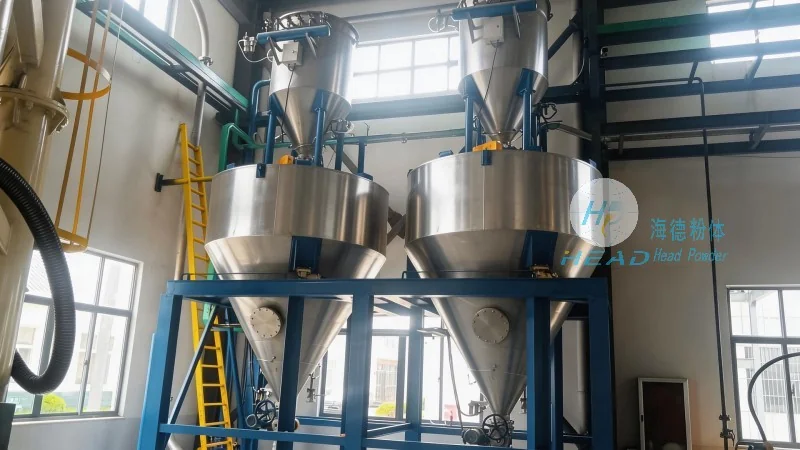
A sodium bicarbonate material handling system typically consists of several interconnected components designed to handle the material from storage to processing. The primary components include storage silos, conveyors, feeding mechanisms, and control systems. Each component plays a vital role in maintaining the integrity and flow of the material. For instance, storage silos are used to store large quantities of sodium bicarbonate, ensuring a steady supply for continuous operations. Conveyors, such as belt or screw conveyors, are employed to transport the material from the silos to processing units or packaging areas. Feeding mechanisms, like rotary valves or metering devices, regulate the flow rate, preventing overloading or underflow. Control systems, often integrated with sensors and automation, monitor the system's performance and adjust operations as needed to maintain efficiency and safety.
Design Principles for Optimal Performance
The design of a sodium bicarbonate material handling system follows several key principles to ensure it operates efficiently, safely, and reliably. One of the fundamental principles is material compatibility. Since sodium bicarbonate is a chemical compound, the system must be constructed from materials that are resistant to corrosion and chemical reactions. Stainless steel is commonly used for components that come into direct contact with the material, as it provides durability and resistance to degradation. Another critical principle is dust control. Sodium bicarbonate is a fine powder, and proper dust management is essential to prevent contamination, health hazards, and equipment damage. The system incorporates features like sealed containers, dust collection systems, and air filtration to minimize dust dispersion. Additionally, the design emphasizes energy efficiency and operational flexibility. By optimizing the conveyor speed, feed rate, and storage capacity, the system can adapt to varying production demands while minimizing energy consumption. This flexibility is particularly important in industries where production volumes fluctuate or where different product grades need to be handled.
Application-Specific Considerations
The design of a sodium bicarbonate material handling system must also consider the specific application and processing requirements. For example, in food processing or pharmaceutical industries, the system must meet stringent hygiene standards. This involves using sanitary materials, easy-to-clean components, and closed systems to prevent contamination. In contrast, in chemical manufacturing, the system may need to handle higher temperatures or more aggressive environments, requiring robust construction and specialized components. The system's design also takes into account the material's physical properties, such as its bulk density and flow characteristics. These properties influence the choice of conveyor type and feeding mechanism. For example, if the material is cohesive or has poor flowability, a screw conveyor with a special design or a vibratory feeder may be used to ensure smooth material transfer. Furthermore, the system's scalability is a key consideration. As production needs grow, the system should be able to accommodate increased capacity without significant modifications. This involves designing components with modular configurations and allowing for future expansion.

Conclusion and Company Overview
In conclusion, a sodium bicarbonate material handling system is a critical infrastructure for industries that rely on this chemical compound. Its design principles focus on material compatibility, dust control, energy efficiency, and operational flexibility. By integrating these principles, the system ensures safe, efficient, and reliable handling of sodium bicarbonate. Shandong HeadPowder Engineering Co., Ltd., with its expertise and commitment to quality, provides comprehensive solutions tailored to the unique needs of its clients. Based in Shandong, China, the company leverages advanced engineering and manufacturing capabilities to deliver systems that meet the highest standards of performance and reliability. Whether for industrial, food, or pharmaceutical applications, the company's approach ensures that each system is optimized for the specific requirements of the end-user, contributing to enhanced productivity and operational success.