

Principle of Coke Pneumatic Conveying System
Understanding the fundamental principles of coke pneumatic conveying systems is crucial for optimizing material handling processes in industrial settings. This system utilizes air as the primary medium to transport coke, a critical component in steel production, from one location to another efficiently and reliably. The core concept revolves around creating a pressure differential that propels the coke particles through a pipeline network, enabling seamless movement without the need for mechanical components like belts or buckets.

Core Components and Their Functions
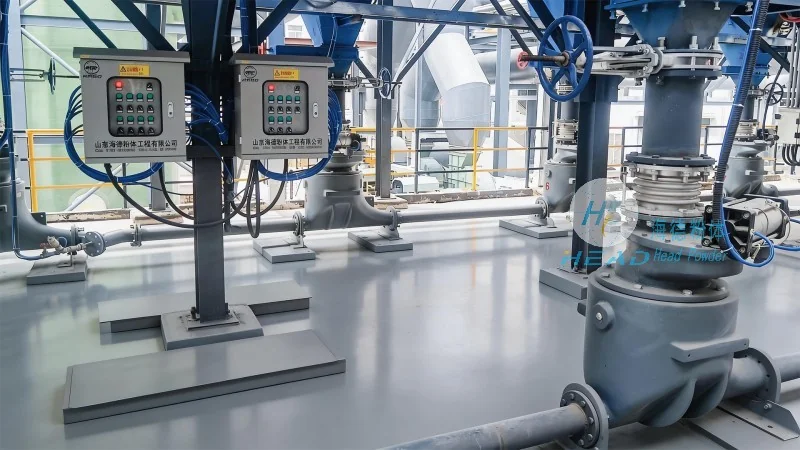
The coke pneumatic conveying system comprises several key components, each playing a vital role in the overall operation. The primary components include the hopper or feeder, which stores and meters the coke; the air compressor or blower, responsible for generating the necessary airflow; the pipeline system, which forms the conduit for the material and air; and the control valves and sensors that regulate the flow and pressure. The hopper ensures a consistent feed rate, preventing blockages and maintaining system stability. The air compressor provides the driving force, with its capacity matching the system's requirements to handle the volume and density of coke particles. The pipeline network, typically made of durable materials such as stainless steel or special alloys, is designed to withstand the abrasive nature of coke and the pressure fluctuations during operation. Control valves, such as rotary valves or slide gates, control the material flow into the pipeline, while pressure sensors and flow meters monitor the system's performance, allowing for real-time adjustments to maintain optimal operation.

Working Principle of the Pneumatic Conveying Process
The operation of a coke pneumatic conveying system is based on the principle of fluidization and suspension. When air is introduced into the hopper or feeder at a controlled rate, it creates a low-pressure zone that draws coke particles into the pipeline. As the air flows through the pipeline, it lifts and suspends the coke particles, transporting them to the destination point. The velocity of the air must be sufficient to keep the particles in suspension, typically ranging from 20 to 30 meters per second for fine coke particles, while larger particles may require higher velocities. The system operates in either positive or negative pressure modes. In positive pressure systems, the pipeline is pressurized above atmospheric pressure, which helps prevent dust emissions and ensures a continuous flow. Negative pressure systems, on the other hand, create a vacuum in the pipeline, drawing material from the source. The choice between these modes depends on the application, environmental regulations, and the distance and height of the material transport.

Advantages of Using Pneumatic Conveying for Coke Transport
Compared to traditional mechanical conveying methods, coke pneumatic conveying systems offer several advantages that make them a preferred choice in many industrial applications. One of the most significant benefits is the ability to transport coke over long distances and vertical heights without the need for intermediate transfer points or elevators. This reduces the overall footprint of the system and simplifies the layout of the facility. Additionally, pneumatic conveying is highly efficient in terms of energy consumption, as the air compressor can be sized to match the exact requirements of the system, minimizing waste. The system also provides excellent control over the material flow, allowing for precise dosing and regulation, which is essential for maintaining consistent quality in downstream processes. Another key advantage is the reduced risk of material degradation or contamination, as the enclosed pipeline prevents exposure to external elements and dust. Furthermore, the system is relatively low maintenance, with fewer moving parts compared to mechanical conveyors, leading to lower operational costs and increased reliability.
Application Scenarios and Industrial Use Cases
Coke pneumatic conveying systems are widely used in various industrial sectors, particularly in the steel industry, where coke is a primary raw material for blast furnaces. The system is employed to transport coke from storage silos or stockpiles to the blast furnace, ensuring a continuous supply of material. In addition to steel production, these systems are also used in other industries such as cement manufacturing, where coke may be used as a fuel or raw material. The flexibility of the system allows it to handle different particle sizes and densities of coke, making it suitable for a wide range of applications. For example, in some facilities, the system may be used to transport coke from a crusher to a storage bin, or from a storage bin to a conveyor belt for further processing. The adaptability of the system to different operational conditions and material characteristics makes it a versatile solution for material handling needs.
System Design Considerations and Customization
The design of a coke pneumatic conveying system requires careful consideration of several factors to ensure optimal performance and longevity. The first consideration is the material of construction, as coke is abrasive and can cause wear on the pipeline and components. Stainless steel or special alloys are commonly used for the pipeline and hopper to withstand the abrasive nature of coke and prevent corrosion. The system's capacity must be matched to the production requirements, with the air compressor and pipeline size determined based on the volume and velocity of the coke particles. The layout of the system, including the length and height of the pipeline, the number of bends and fittings, and the location of the control valves, must be optimized to minimize pressure losses and ensure efficient material transport. Additionally, the system must comply with local regulations regarding dust emissions and safety, which may require the use of dust collection systems or explosion-proof components. Customization is often necessary to meet the specific needs of each application, such as adjusting the system for different particle sizes, varying the distance of transport, or integrating with existing equipment in the facility.