

What is Yellow Sand Pneumatic Conveying, Classification and Applications of Pneumatic Conveying
Pneumatic conveying is a sophisticated method for transporting bulk materials, such as powders and granules, through a sealed pipeline using air or other gases. This technology has become a cornerstone of material handling in industries ranging from mining and construction to food processing and pharmaceuticals. The core principle involves creating a flow of air within the system, which then carries the material from the source to the destination. Unlike traditional methods like belt conveyors or bucket elevators, pneumatic conveying offers flexibility in system layout and the ability to handle materials that are difficult to transport by other means. Understanding the fundamentals of pneumatic conveying is essential for selecting the right system for specific applications and optimizing material transport efficiency.

What is Yellow Sand Pneumatic Conveying?
Yellow sand, also known as yellow earth or silt, is a fine-grained soil commonly found in arid and semi-arid regions. It is characterized by its high moisture content, fine particle size (typically ranging from 0.05 to 2 mm), and potential for caking under certain conditions. Pneumatic conveying of yellow sand involves the use of air to transport this material through a pipeline. The process requires specialized equipment to address the unique challenges posed by yellow sand, including its tendency to stick to pipeline walls, potential for dust generation, and the need for efficient separation of air and material. Effective yellow sand pneumatic conveying systems must be designed to maintain material integrity, minimize system downtime, and ensure consistent performance under varying operating conditions.

Classification of Pneumatic Conveying Systems
Pneumatic conveying systems are primarily classified based on the pressure of the air used to transport the material. The two main categories are positive pressure systems and negative pressure systems. Positive pressure systems, also known as pressure conveying, operate by blowing air into the pipeline, creating a pressure higher than the ambient air. This method is suitable for long-distance and high-capacity transport of materials, as it can maintain a consistent flow over extended distances. Common applications include transporting bulk materials from storage silos to processing plants or from one production facility to another. Negative pressure systems, or vacuum conveying, operate by creating a vacuum in the pipeline, drawing the material into the system. This approach is ideal for short-distance transport and handling of fine powders, as it can effectively capture and transport materials without the need for high-pressure air. Hybrid systems, which combine elements of both positive and negative pressure, are also available and are used in applications where both long-distance and short-distance transport is required.

Applications of Pneumatic Conveying in Material Handling
The versatility of pneumatic conveying makes it applicable across a diverse range of industries. In the construction sector, yellow sand is a critical raw material for concrete production. Pneumatic conveying systems enable efficient transport of yellow sand from storage silos to batching plants, ensuring consistent quality and reducing manual handling. This not only improves operational efficiency but also minimizes the risk of material contamination and dust exposure for workers. In mining operations, pneumatic conveying is used to transport ore and tailings over long distances, minimizing environmental impact and improving safety compared to traditional trucking methods. The ability to handle large volumes of material with minimal personnel involvement makes it an attractive option for mining companies. The food and pharmaceutical industries also rely on pneumatic conveying for transporting powders and granules, where maintaining product purity and preventing contamination is paramount. These industries often require systems that are designed to meet strict sanitary standards and can handle materials with low moisture content and fine particle sizes.
Key Considerations for Yellow Sand Pneumatic Conveying
When implementing a yellow sand pneumatic conveying system, several key factors must be considered to ensure optimal performance and reliability. The first is the material's physical properties, including particle size distribution, moisture content, and density. These characteristics directly impact the selection of equipment such as cyclones, filters, and pipeline diameter. For example, finer particles may require smaller pipeline diameters and more efficient separation systems to prevent clogging. Second, the system's pressure and flow rate must be carefully optimized to prevent material degradation and maintain system efficiency. High pressure can cause particle breakage, while low pressure may lead to insufficient material transport. Third, proper maintenance is crucial to avoid system downtime. Regular cleaning of filters, checking for air leaks, and inspecting pipeline components are essential to ensure the system operates at peak performance. Additionally, safety considerations, such as explosion-proof designs for flammable materials and dust suppression measures, are critical to ensure operational safety and compliance with regulatory standards.
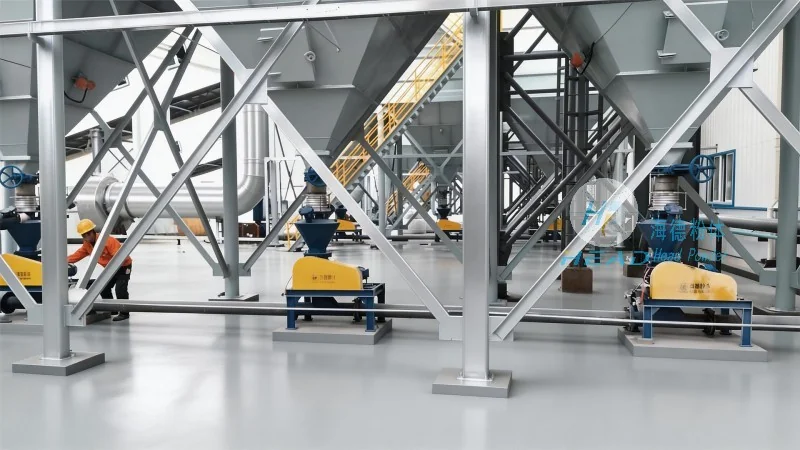
Shandong HeadPowder Engineering Co., Ltd. and Pneumatic Conveying Solutions
Shandong HeadPowder Engineering Co., Ltd. is a leading provider of advanced material handling solutions, specializing in the design, manufacturing, and installation of pneumatic conveying systems. With a strong focus on innovation and customer satisfaction, the company has established itself as a trusted partner for industries seeking reliable and efficient material transport solutions. HeadPowder's expertise lies in handling challenging materials like yellow sand, ensuring that their systems are tailored to meet the unique requirements of each application. The company's approach involves a thorough analysis of client needs, including material characteristics, transport distances, and operational constraints, to design customized systems that deliver optimal performance. By leveraging advanced engineering and quality control processes, HeadPowder delivers systems that enhance productivity, reduce operational costs, and improve safety in material handling operations. The company's commitment to research and development ensures that their solutions remain at the forefront of industry standards, providing clients with cutting-edge technology and sustainable solutions for their material handling challenges.