

Analysis of Pneumatic Conveying Technology for Battery Cathode Materials: Comparison of Positive and
Pneumatic conveying is a critical technology in the processing and handling of battery cathode materials, which are essential components in modern lithium-ion batteries. As the demand for high-performance batteries grows, efficient and reliable material transport systems are paramount. This article provides an in-depth analysis of the two primary pneumatic conveying modes—positive pressure and negative pressure—exploring their working principles, applications, and key considerations for selecting the most suitable system for battery cathode material handling. The discussion is anchored by the expertise of Shandong HeadPowder Engineering Co., Ltd., a leading provider of specialized engineering solutions for the battery materials industry.

Positive Pressure Pneumatic Conveying: Working Principle and Applications
Positive pressure pneumatic conveying systems operate by injecting compressed air or other gases into a conveying line to move material from the source to the destination. In this mode, the air pressure is higher than the ambient pressure, creating a pressure differential that propels the material forward. The system typically consists of a blower, a hopper or feeder, a conveying line, and a receiver. The compressed air is introduced at the inlet, and the material is entrained by the air stream, traveling through the pipeline. This method is particularly effective for handling fine powders and granules, such as those used in battery cathode materials, where low friction and minimal particle degradation are required.
Applications of positive pressure systems include long-distance transport, vertical lifting, and material transfer between different processing stages. For example, in a battery material production line, positive pressure conveying can be used to move cathode active materials from a raw material storage silo to a mixing or coating unit. The high pressure ensures consistent flow rates and prevents blockages, making it ideal for continuous production processes. However, positive pressure systems may require more energy due to the need for high-pressure air, and they can be more complex to maintain, especially in environments with high dust concentrations.

Negative Pressure (Vacuum) Pneumatic Conveying: Working Principle and Applications
Negative pressure, or vacuum, pneumatic conveying systems work by creating a low-pressure environment at the inlet, which draws material into the conveying line. The system uses a vacuum pump to reduce pressure in the line, causing ambient air to flow into the inlet and carry the material with it. The material is then transported to a receiver where the air is filtered and the material is collected. This mode is often preferred for applications where the material needs to be transported from a source that is at a higher elevation or where the material is sensitive to high pressure.
Applications of vacuum systems include short-distance transport, material recovery from process equipment, and handling of materials that are prone to dust explosion risks. For instance, in battery cathode material processing, vacuum conveying can be used to collect fine powders from a mixer or a dryer and transport them to a storage silo. The low-pressure environment minimizes the risk of dust dispersion and explosion, making it suitable for hazardous material handling. However, vacuum systems may have lower conveying capacities compared to positive pressure systems and can be less efficient for long-distance transport due to the energy required to maintain a vacuum.
Comparison of Positive and Negative Pressure Modes: Key Factors to Consider
When selecting a pneumatic conveying system for battery cathode materials, several factors must be considered to ensure optimal performance and efficiency. The choice between positive and negative pressure modes depends on the specific application requirements, material characteristics, and operational constraints. Key factors include the distance and elevation changes, material flow rate, particle size and density, and the need for dust control or explosion protection.

Positive pressure systems generally offer higher conveying capacities and are more suitable for long-distance or high-elevation transport. They are also better suited for materials that are prone to agglomeration or require high flow rates. However, they may require more energy and can generate higher dust levels, necessitating additional filtration and safety measures. Negative pressure systems, on the other hand, are ideal for short-distance transport and for handling materials that are sensitive to high pressure or dust dispersion. They are also more energy-efficient for low-volume applications and provide better dust containment, reducing the risk of environmental contamination.
Another critical factor is the cost and maintenance considerations. Positive pressure systems typically have higher initial costs due to the need for high-pressure blowers and robust pipelines, but they may have lower operational costs for high-volume applications. Negative pressure systems are generally less expensive to install but may have higher maintenance costs due to the vacuum pump and filtration systems. The choice also depends on the available space and layout of the production facility, as positive pressure systems require more space for the blower and receiver, while negative pressure systems can be more compact.
HeadPowder's Expertise in Pneumatic Conveying Solutions for Battery Materials
Shandong HeadPowder Engineering Co., Ltd. specializes in providing customized pneumatic conveying solutions tailored to the unique needs of the battery materials industry. With years of experience in the field, HeadPowder has developed a deep understanding of the challenges associated with handling fine and sensitive materials, such as battery cathode powders. The company's engineering team designs and manufactures systems that optimize material transport efficiency while ensuring compliance with safety and environmental regulations.
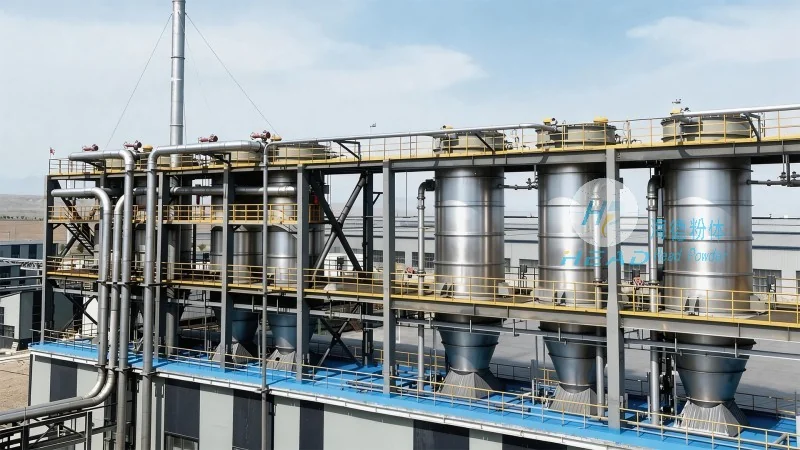
HeadPowder's solutions include both positive and negative pressure conveying systems, as well as hybrid systems that combine the benefits of both modes. The company's expertise lies in selecting the most appropriate mode based on the specific application, material characteristics, and operational requirements. For example, for a battery cathode material plant requiring long-distance transport of fine powders, HeadPowder may recommend a positive pressure system with advanced filtration and dust control measures. For a facility handling materials that are prone to dust explosions, a vacuum system with explosion-proof components may be recommended.
HeadPowder's commitment to quality and innovation is reflected in its use of cutting-edge technology and materials in the design of its conveying systems. The company's products are designed to minimize material degradation, reduce energy consumption, and enhance overall system reliability. By leveraging its expertise in pneumatic conveying, HeadPowder helps battery manufacturers improve their production efficiency, reduce costs, and ensure the safe and sustainable handling of battery cathode materials.