

Analysis of Sodium Fluorosilicate Pneumatic Conveying Technology: Comparison of Positive and Negativ
Sodium fluorosilicate, a critical chemical utilized across industries including glass manufacturing, ceramics, and water treatment, demands efficient material handling solutions. Pneumatic conveying technology offers an effective method to transport this powder, with two primary operational modes: positive pressure and negative pressure systems. Understanding the distinctions between these modes is essential for selecting the optimal solution for specific applications. This article provides a detailed analysis of both positive and negative pressure pneumatic conveying systems for sodium fluorosilicate, highlighting technical aspects, advantages, disadvantages, and suitable applications.

Positive Pressure Pneumatic Conveying System
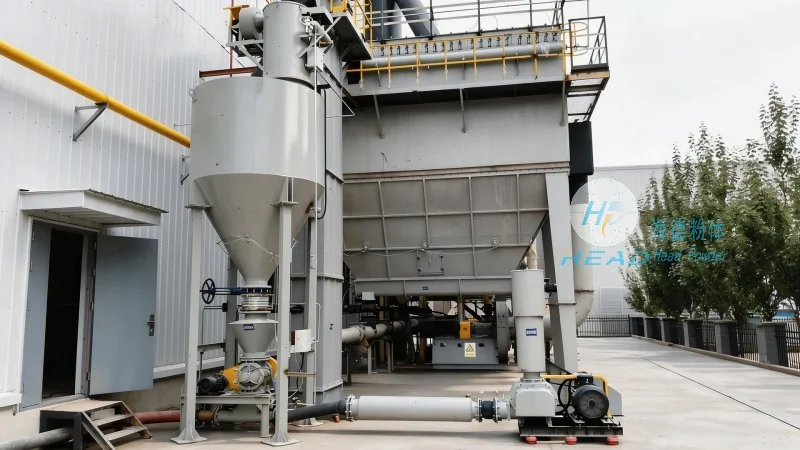
Positive pressure systems operate by blowing air or a carrier gas into the conveying line, creating a pressure higher than ambient air pressure. The material is drawn into the line due to the pressure differential and transported to the destination. For sodium fluorosilicate, this mode is typically used for short to medium distances, often up to several hundred meters. The system comprises a blower, material feeder, conveying line, and receiver. The blower supplies the necessary pressure to move the powder, while the feeder ensures consistent flow rates. The conveying line is usually constructed from stainless steel or other corrosion-resistant materials to accommodate the chemical properties of sodium fluorosilicate. A key advantage of positive pressure systems is their ability to handle abrasive materials without significant equipment wear. Additionally, they can transport materials through vertical and horizontal sections, making them versatile for complex layouts. However, these systems may require more maintenance due to higher pressure and the need for regular line cleaning to prevent clogging. Energy consumption is also higher compared to negative pressure systems, as more power is needed to generate pressure. Dust emissions must also be managed with appropriate filtration and ventilation systems.

Negative Pressure Pneumatic Conveying System
Negative pressure systems, also known as vacuum or suction systems, operate by creating a vacuum in the conveying line, which draws the material from the source into the line. The material is then transported to the receiver under the influence of the vacuum. This mode is commonly used for longer distances, often exceeding 500 meters, and is particularly suitable for applications where the material needs to be transported from a lower to a higher elevation. The system includes a vacuum pump, material feeder, conveying line, and receiver. The vacuum pump creates the necessary suction to draw the powder, and the feeder controls material flow. The conveying line is typically made of flexible or rigid materials, depending on distance and layout. A key advantage of negative pressure systems is lower energy consumption compared to positive pressure systems, as the vacuum pump operates at lower pressure, reducing operational costs and equipment wear. However, these systems are more susceptible to clogging due to lower material velocity, especially for fine powders like sodium fluorosilicate. Dust emission risks are also higher, requiring advanced filtration systems to comply with environmental regulations. Additionally, the system may have limitations in handling abrasive or sticky materials, as low pressure can cause material buildup in the line.
Comparison of Positive and Negative Pressure Modes
When selecting a pneumatic conveying system for sodium fluorosilicate, it is crucial to compare positive and negative pressure modes based on operational requirements. The choice depends on factors such as conveying distance, elevation difference, material properties (e.g., particle size, moisture, abrasiveness), and available space for equipment. Positive pressure systems are preferred for short to medium distances and material transport to lower elevations. They offer better flow control and are less prone to clogging. Negative pressure systems are more suitable for longer distances and material transport to higher elevations. They are more energy-efficient but require robust filtration and maintenance to prevent clogging and dust emissions. Cost is another critical factor: positive pressure systems may have higher initial and operational costs due to high-pressure blowers and extensive filtration, while negative pressure systems have lower initial costs but higher long-term maintenance costs from vacuum pumps and filtration. Ultimately, the optimal choice depends on a thorough evaluation of application-specific needs and constraints.