

Preventing Pipe Blockages in Pneumatic Conveying Systems for Fertilizer Transport: Key Design Parame
Efficient and reliable fertilizer transport is crucial for agricultural operations, and pneumatic conveying systems have emerged as a preferred solution due to their ability to handle bulk materials over long distances. However, a common challenge in such systems is the risk of pipe blockages, which can lead to operational disruptions and increased maintenance costs. Understanding and implementing effective strategies to prevent blockages is essential for maintaining system performance and ensuring smooth fertilizer delivery. This article explores the methods to prevent pipe blockages in pneumatic conveying systems used for fertilizer transport and highlights the critical design parameters that contribute to their success.

Understanding Pneumatic Conveying Systems for Fertilizer Transport
Pneumatic conveying systems utilize air or gas to transport bulk materials like fertilizers through a network of pipes. These systems can be categorized into two main types: dilute-phase and dense-phase. Dilute-phase systems operate at higher velocities, moving material in a dispersed state, while dense-phase systems use lower velocities and higher pressure to move material in a more compacted state. The choice between these systems depends on the specific characteristics of the fertilizer, such as particle size, moisture content, and flowability. For fertilizer transport, dilute-phase systems are often preferred for their efficiency and lower energy consumption, but they require careful design to prevent blockages.
Key Design Parameters for Preventing Pipe Blockages
Several key design parameters play a vital role in preventing pipe blockages in pneumatic conveying systems. The first and most critical parameter is the pipe diameter. Larger pipe diameters reduce the velocity of the material and air, which helps in preventing the material from settling and forming clumps. However, excessively large diameters can increase system costs and energy consumption. Therefore, selecting an appropriate pipe diameter based on the material's flow properties and the system's capacity is essential. For example, Shandong HeadPowder Engineering Co., Ltd. recommends using pipes with diameters ranging from 100mm to 300mm for most fertilizer types, depending on the bulk density and particle size.

The second critical parameter is the conveying velocity. The velocity of the air or gas must be sufficient to keep the material in suspension but not so high that it causes excessive wear on the system components. The optimal velocity varies depending on the material's characteristics. For fertilizers with high moisture content or fine particles, higher velocities may be required to prevent agglomeration. Conversely, for coarser materials, lower velocities may be sufficient. The velocity is typically measured in meters per second (m/s) and is calculated based on the material's terminal velocity and the system's pressure drop. Shandong HeadPowder Engineering Co., Ltd. suggests maintaining a velocity of 15-25 m/s for most fertilizer applications to ensure effective transport without causing blockages.
The third important parameter is the system pressure. The pressure in the pneumatic conveying system affects the velocity of the material and the air, as well as the ability to overcome resistance in the pipes. Higher pressures allow for higher velocities and can help in breaking up agglomerates, reducing the risk of blockages. However, excessive pressure can lead to increased energy consumption and potential damage to the system components. The optimal pressure is determined by the system's design and the material's properties. For fertilizer transport, pressures ranging from 0.5 to 2.0 bar are commonly used, with higher pressures for systems handling fine or moist materials.
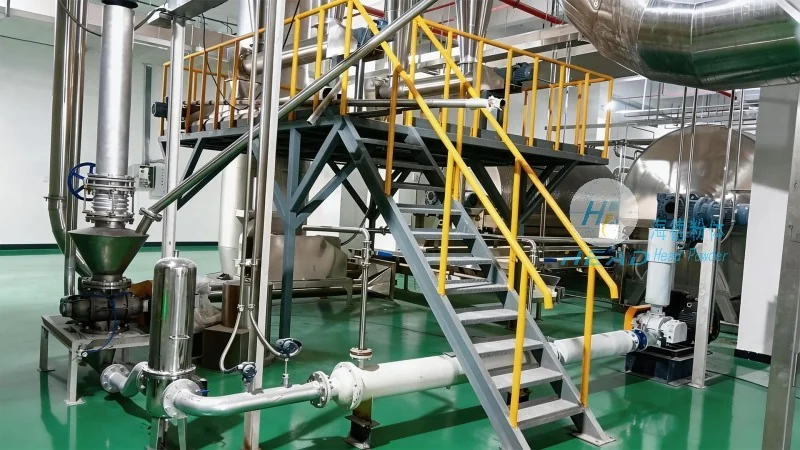
The fourth parameter is the material's flowability. The flow properties of the fertilizer, such as its angle of repose, compressibility, and cohesive forces, significantly impact the system's performance. Materials with high cohesive forces or poor flowability are more prone to blockages. To mitigate this, the system design may include features like vibrators, agitators, or air knives to improve material flow. Shandong HeadPowder Engineering Co., Ltd. often incorporates these features in their systems to ensure smooth transport of even challenging fertilizers.

Additional Strategies to Prevent Pipe Blockages
Beyond the design parameters, several operational and maintenance strategies can help prevent pipe blockages. Regular cleaning of the system, especially after handling different types of fertilizers, is crucial to remove any residual material that could cause blockages. Using filters and cyclones to separate the material from the air also helps in maintaining the system's efficiency and preventing clogs. Additionally, monitoring the system's pressure and velocity in real-time allows operators to detect any changes that may indicate an impending blockage and take corrective action promptly.
Conclusion
Preventing pipe blockages in pneumatic conveying systems for fertilizer transport requires a combination of proper design and effective operational practices. By carefully selecting the pipe diameter, conveying velocity, system pressure, and considering the material's flowability, system designers can minimize the risk of blockages and ensure reliable fertilizer transport. Companies like Shandong HeadPowder Engineering Co., Ltd. specialize in designing and manufacturing pneumatic conveying systems tailored to the specific needs of fertilizer producers, helping them achieve efficient and uninterrupted material transport. With the right design parameters and maintenance strategies, pneumatic conveying systems can provide a cost-effective and reliable solution for fertilizer transport, contributing to the overall efficiency of agricultural operations.