

Working Principle and Classification Applications of Glass Particle Pneumatic Conveying
Understanding the working principles and application classifications of glass particle pneumatic conveying is crucial for optimizing material handling processes in various industrial settings. This article provides an in-depth overview of the technology, its operational mechanisms, and the diverse applications across different industries.

Introduction to Glass Particle Pneumatic Conveying
Glass particle pneumatic conveying is a method of transporting solid particles, such as glass beads, powders, or fragments, through a pipeline using a pressurized or vacuum air stream. This technology offers several advantages over traditional mechanical conveying systems, including reduced equipment wear, lower maintenance costs, and the ability to handle abrasive materials without causing significant damage to the conveying line.
Core Working Principle of Pneumatic Conveying Systems
The fundamental principle behind glass particle pneumatic conveying involves the use of air as the conveying medium. In a typical system, air is either supplied under pressure (positive pressure system) or extracted by a vacuum pump (negative pressure system) to create a flow that transports the glass particles. The system consists of several key components, including a hopper for material storage, a feeder to control the flow rate, a conveying line, and a receiver for the discharged material. The air velocity within the pipeline must be sufficient to overcome the gravitational and frictional forces acting on the glass particles, ensuring stable and efficient transport.
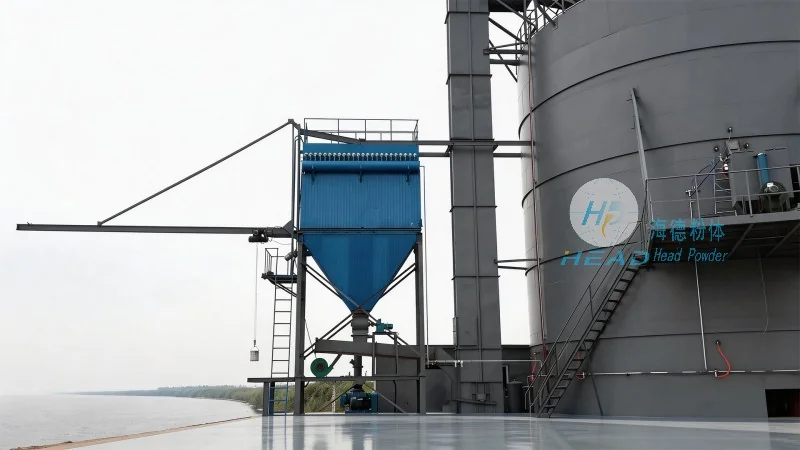
Classification of Pneumatic Conveying Systems Based on Operating Pressure
Pneumatic conveying systems for glass particles are commonly classified into two main categories based on the operating pressure: positive pressure systems and negative pressure systems. Positive pressure systems use a blower or compressor to generate pressurized air that pushes the material through the pipeline. These systems are often preferred for long-distance or high-capacity conveying due to their ability to maintain consistent air pressure and flow rates. Negative pressure systems, on the other hand, utilize a vacuum pump to create a suction effect that draws the material into the pipeline. This type of system is typically used for shorter distances or when the material needs to be transported from a lower elevation to a higher one.
Application Classifications in Different Industries
The versatility of glass particle pneumatic conveying makes it applicable across a wide range of industries. In the glass manufacturing sector, for example, the technology is used to transport raw materials like sand, soda ash, and limestone to the melting furnaces. The high-temperature resistance and chemical inertness of the conveying systems ensure that the glass particles remain intact during transport. In the pharmaceutical industry, pneumatic conveying is employed to handle glass vials and bottles, where contamination control and material purity are critical. The system's ability to maintain a clean and dust-free environment makes it suitable for such applications. Additionally, in the food processing industry, glass particle conveying is used for transporting food-grade glass containers and packaging materials, ensuring that the products remain free from contaminants and spoilage.

Key Factors Influencing System Performance and Selection
Several factors must be considered when selecting and optimizing a glass particle pneumatic conveying system. The particle size, density, and shape of the glass material are critical parameters that affect the system's performance. For instance, fine glass powders may require higher air velocities to prevent clogging, while larger fragments may need a different feeder design to ensure consistent flow. The distance and elevation changes between the material source and the destination also play a significant role in determining the appropriate system type and components. Furthermore, the required conveying capacity and the desired flow rate must be matched with the system's capabilities to ensure efficient operation. Proper system design and maintenance are essential to minimize downtime and maximize the lifespan of the equipment.
Conclusion and Industry Impact
Glass particle pneumatic conveying is a highly effective and versatile technology that enhances material handling efficiency in various industrial applications. By understanding the working principles and application classifications, industries can optimize their processes, reduce costs, and improve overall productivity. As technology advances, the development of more efficient and sustainable conveying systems continues to drive innovation in the field, further expanding the applications of glass particle pneumatic conveying.