

Principle and Classification Application of Regenerated Sand Pneumatic Conveying
Regenerated sand, also known as reclaimed sand, is a vital material in the foundry industry, and its efficient handling is crucial for maintaining production efficiency and quality. Pneumatic conveying systems have emerged as a preferred method for transporting regenerated sand due to their flexibility, cleanliness, and ability to handle fine powders. This article provides an overview of the working principles and classification applications of regenerated sand pneumatic conveying systems, highlighting the key factors that influence system design and performance.
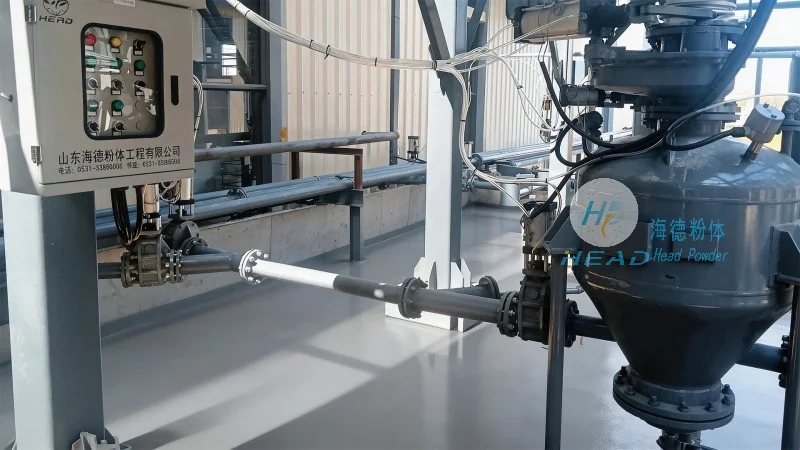
Understanding the Working Principle of Regenerated Sand Pneumatic Conveying
The core of a pneumatic conveying system is the transfer of material using air or gas as the conveying medium. In the context of regenerated sand, the system typically operates under positive pressure or negative pressure, depending on the specific application and system configuration. The working principle involves several key components and processes:
First, the regenerated sand is fed into the system from a storage hopper or silo. A feeder, such as a rotary valve or a screw feeder, controls the flow rate of the sand into the conveying line. The feeder ensures a consistent and controlled supply of material, which is essential for maintaining system efficiency and preventing blockages.
Next, the sand is introduced into the conveying line, where it is mixed with the conveying air. The air, often supplied by a blower or a positive displacement pump, creates a flow that propels the sand particles through the pipeline. The velocity of the air is a critical parameter, as it must be sufficient to overcome the gravitational force and the frictional resistance of the sand particles within the pipe.
As the sand travels through the pipeline, it may encounter various components, such as bends, expansions, or filters. These components are designed to maintain the air-sand mixture's stability and prevent particle separation or deposition. For example, bends are often equipped with internal liners or special designs to reduce friction and minimize particle attrition.
At the discharge end of the system, the conveying air and sand are separated. This is typically achieved using a separator or a cyclone, which uses centrifugal force to separate the sand from the air. The separated sand is then collected in a receiving hopper or silo, while the air is either filtered and recirculated or vented to the atmosphere, depending on the system's design and environmental requirements.
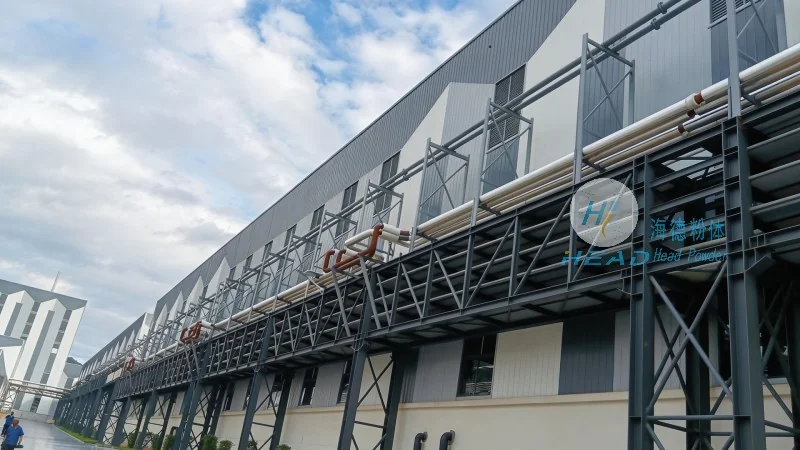
Classification of Regenerated Sand Pneumatic Conveying Systems
Regenerated sand pneumatic conveying systems can be classified based on several factors, including the conveying pressure, the type of air flow, and the system configuration. The primary classifications are positive pressure systems and negative pressure systems.
Positive pressure systems operate by blowing air into the conveying line, creating a pressure higher than the ambient air pressure. This type of system is commonly used for short to medium-distance conveying and is suitable for handling abrasive materials like regenerated sand. The positive pressure system ensures that the material is continuously pushed through the line, reducing the risk of blockages and ensuring a consistent flow rate.
Negative pressure systems, on the other hand, operate by drawing air and material from the conveying line using a vacuum or a suction device. This type of system is often used for longer-distance conveying or for applications where it is necessary to prevent dust emissions from the system. The negative pressure system creates a vacuum that pulls the sand and air mixture through the pipeline, and the air is then filtered and recirculated to maintain system efficiency.
Within these primary classifications, there are further subcategories based on the specific design and components used. For example, dilute phase systems operate at relatively low air-to-sand ratios, typically 5 to 10 times the weight of the sand, and are suitable for short to medium distances. Dense phase systems, conversely, operate at higher air-to-sand ratios, typically 1 to 3 times the weight of the sand, and are used for longer distances or for materials that are more prone to segregation.

Application Scenarios and System Design Considerations
The choice of a pneumatic conveying system for regenerated sand depends on several factors, including the distance between the feeding and discharge points, the required flow rate, the material characteristics, and the environmental regulations. System designers must consider the sand's particle size distribution, moisture content, and abrasiveness, as these factors can significantly impact system performance and component lifespan.
For example, in a foundry setting, regenerated sand is often used in the reclamation process, where it is recycled from the sand molding process. The pneumatic conveying system must be designed to handle the sand's abrasive nature, which can cause wear on the pipeline and components. The use of wear-resistant materials, such as stainless steel or special alloys, is common in such applications to extend the system's service life.
Another important consideration is the system's capacity and flow rate. The required flow rate depends on the production rate of the foundry and the amount of sand that needs to be recycled. System designers must ensure that the conveying line diameter and the air velocity are optimized to achieve the desired flow rate without causing excessive pressure drop or particle attrition.
Environmental factors also play a crucial role in system design. Many foundries are required to comply with dust emission regulations, which means that the pneumatic conveying system must include effective dust collection and filtration. The system may be equipped with a dust collector that captures the fine particles from the air stream, ensuring that the air is clean before it is vented to the atmosphere or recirculated.
Conclusion
Regenerated sand pneumatic conveying systems are an essential technology in the foundry industry, providing an efficient and reliable method for handling reclaimed sand. By understanding the working principles and classification applications of these systems, foundry operators can select the most appropriate system for their specific needs, ensuring optimal performance, minimal downtime, and compliance with environmental regulations. As the foundry industry continues to evolve, the development of advanced pneumatic conveying systems will remain critical for maintaining competitiveness and sustainability.