

Classification and Composition of Alumina Hydroxide Powder Pneumatic Conveying Systems
Alumina hydroxide powder pneumatic conveying systems are critical in industrial processes for efficiently transporting fine powders like alumina hydroxide. These systems are designed to handle the unique properties of such powders, ensuring reliable and safe material transport. The classification and composition of these systems are essential for understanding their functionality and application in various industries.
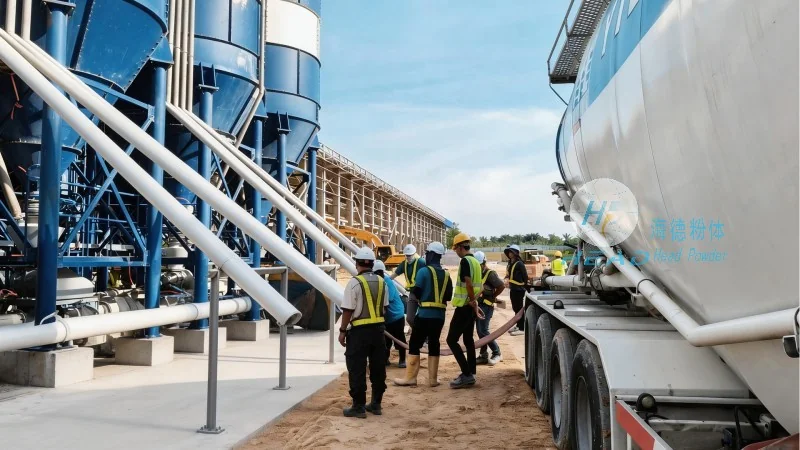
Overview of Alumina Hydroxide Powder Pneumatic Conveying Systems
Alumina hydroxide, also known as aluminum hydroxide, is a white powder commonly used in applications such as flame retardants, rubber, and cosmetics. Its fine particle size and hygroscopic nature make traditional bulk handling methods inefficient and potentially hazardous. Pneumatic conveying systems offer a solution by using air to transport the powder, reducing dust exposure and improving process control. The systems are categorized based on the conveying principle, with key components that work together to achieve effective material transport.
Classification of Pneumatic Conveying Systems
There are two primary classifications of pneumatic conveying systems: dilute phase and dense phase. Dilute phase systems operate at low pressure and high velocity, suitable for long-distance transport of fine powders. Dense phase systems, on the other hand, use higher pressure and lower velocity to minimize particle degradation and ensure gentle handling. For alumina hydroxide, the choice between these systems depends on the specific application requirements, such as the distance to be covered and the need for low particle attrition.

Key Components of the Pneumatic Conveying System
The core components of an alumina hydroxide powder pneumatic conveying system include the hopper, feeder, air compressor, conveying line, and receiver. The hopper stores the powder and provides a consistent feed to the system. The feeder, often a rotary valve or screw feeder, controls the flow rate of the powder into the conveying line. The air compressor generates the necessary pressure and volume of air to move the powder through the system. The conveying line, typically made of stainless steel or other corrosion-resistant materials, transports the powder and air mixture. The receiver collects the delivered powder and separates it from the air, completing the transport cycle.
Feeder and Hopper Design Considerations
For alumina hydroxide, which is hygroscopic and prone to caking, the hopper and feeder design are critical. The hopper is often equipped with a cone or cone with a vent to prevent material bridging and ensure smooth flow. The feeder must be capable of handling the powder's low bulk density and potential for agglomeration. Shandong HeadPowder Engineering Co., Ltd. specializes in designing custom hopper and feeder systems that address these challenges, ensuring reliable material feed for the pneumatic conveying process.

Compressor and Air System
The air compressor is a vital component that provides the energy for the conveying process. For dilute phase systems, a positive displacement compressor is commonly used, while for dense phase systems, a reciprocating or rotary screw compressor may be employed. The compressor must be sized to handle the required air volume and pressure, considering the system's length and the powder's characteristics. The air system also includes filters and regulators to maintain air quality and pressure stability, preventing contamination and ensuring consistent performance.

Conveying Line and Material Handling
The conveying line is designed to minimize pressure drop and particle separation. Stainless steel or plastic lines are used, depending on the powder's corrosiveness and the system's operating conditions. The line may include bends, expansions, and restrictions to control the flow and prevent blockages. For alumina hydroxide, which can be abrasive, the line is often lined with wear-resistant materials to extend its lifespan. The receiver, typically a hopper or tank, collects the powder and may include a dust collection system to capture any fine particles that escape during the process.
Application and Industry Use
Alumina hydroxide powder pneumatic conveying systems are widely used in industries such as chemical manufacturing, pharmaceuticals, and food processing. In chemical plants, they transport the powder for use in flame retardant production, while in pharmaceuticals, they ensure the safe handling of the material during formulation. The systems are also used in the cosmetics industry for producing skincare products that incorporate aluminum hydroxide. The efficiency and safety of these systems make them indispensable in processes where fine powder handling is required.