

Introduction to Quicklime Pneumatic Conveyor: Structure and Working Principles
HeadPowder, a leading manufacturer based in Shandong, China, specializes in the design and production of advanced pneumatic conveying systems tailored for various industrial applications. This article provides a comprehensive overview of a quicklime pneumatic conveyor, focusing on its structural design and operational principles.
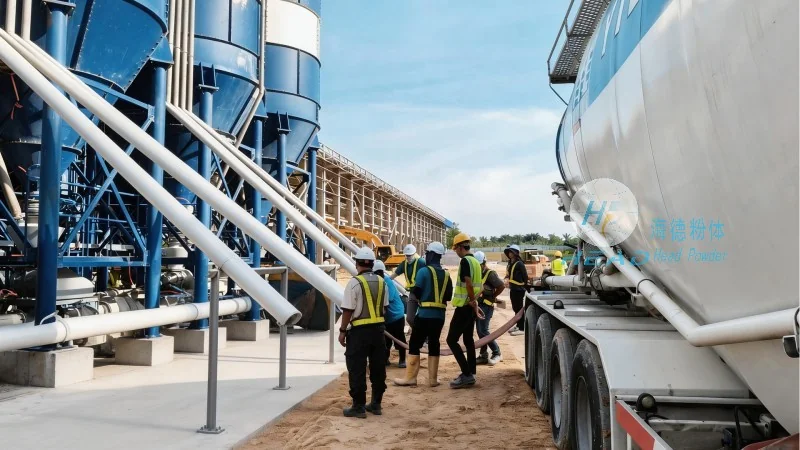
Overview of Quicklime Pneumatic Conveying Systems
Quicklime, or calcium oxide (CaO), is a widely used chemical in industries such as construction, steel production, and water treatment. Efficient and reliable transportation of quicklime is crucial for maintaining production efficiency and ensuring product quality. Pneumatic conveying systems offer a solution by utilizing air pressure to transport bulk materials like quicklime in a dust-free and controlled manner.
Key Structural Components of the Quicklime Pneumatic Conveyor
The quicklime pneumatic conveyor consists of several critical components that work in tandem to ensure smooth material transport. These components include:

- Material Hopper: A storage container that holds the quicklime before it is fed into the system. The hopper is designed with a discharge valve to control the flow of material.
- Air Supply System: Comprised of a blower or compressor that generates the necessary air pressure to move the quicklime particles. The system includes filters and regulators to maintain air quality and pressure stability.
- Conveying Pipeline: A network of pipes that transports the quicklime from the hopper to the discharge point. The pipeline is typically made of durable materials like stainless steel or plastic to resist corrosion and wear from the quicklime.
- Control Valves and Regulators: These components regulate the flow of air and material, ensuring consistent and safe operation. They include check valves, flow meters, and pressure sensors to monitor system performance.
- Discharge Unit: The final component where the quicklime is released from the pipeline. This unit may include a dust collector or filtration system to prevent dust emissions and maintain environmental compliance.
Working Principles of the Quicklime Pneumatic Conveyor
The operation of the quicklime pneumatic conveyor is based on the principle of pneumatic transport, where air is used to create a flow of material particles. The process typically involves the following steps:

- Material Loading: Quicklime is fed from the hopper into the conveying pipeline through a feeder mechanism. The feeder ensures a consistent flow of material into the system.
- Air Injection: The air supply system injects high-pressure air into the pipeline, creating a flow that lifts and propels the quicklime particles. The air velocity is carefully controlled to prevent material degradation or blockages.
- Transportation: The quicklime particles are carried through the pipeline by the air stream. The pipeline design, including bends and fittings, is optimized to minimize pressure loss and maintain efficient transport.
- Discharge: At the discharge point, the air and material mixture is separated. The quicklime is collected in a receiving container, while the air is filtered and returned to the system or vented safely.
Advantages of Using a Quicklime Pneumatic Conveyor
Implementing a quicklime pneumatic conveyor offers several benefits for industrial operations:

- Efficiency and Speed: Pneumatic conveying allows for rapid and continuous transport of quicklime, reducing downtime and increasing production throughput.
- Dust-Free Operation: Unlike traditional methods like bucket elevators or belt conveyors, pneumatic systems operate in a closed environment, minimizing dust emissions and improving workplace safety.
- Low Maintenance: The system’s design minimizes mechanical parts in contact with the material, reducing wear and tear and lowering maintenance requirements.
- Flexibility: Pneumatic conveyors can be easily reconfigured or expanded to accommodate changes in production needs or facility layout.
Application Scenarios
Quicklime pneumatic conveyors are commonly used in various industrial settings, including:
- Construction Material Production: Transporting quicklime from storage to production lines for cement or concrete manufacturing.
- Steel Industry: Supplying quicklime to steel furnaces for desulfurization and slag formation processes.
- Water Treatment: Conveying quicklime to water treatment plants for pH adjustment and water purification.
- Chemical Manufacturing: Handling quicklime in chemical production facilities for various processing steps.
Conclusion
HeadPowder’s quicklime pneumatic conveyor represents a reliable and efficient solution for transporting bulk quicklime in industrial applications. With its robust structural design and advanced operational principles, this system enhances productivity, ensures safety, and maintains environmental standards. By leveraging the expertise of Shandong HeadPowder Engineering Co., Ltd., based in Shandong, China, industries can achieve optimal performance and cost-effectiveness in their material handling processes.