

Introduction to Pneumatic Conveying Equipment for Battery Positive Electrode Materials and Its Struc
Pneumatic conveying equipment is a critical component in the processing and handling of battery positive electrode materials, which are fundamental to modern lithium-ion battery technology. This equipment is engineered to efficiently transport these materials within production facilities, ensuring high purity, minimal contamination, and consistent quality. The technology relies on the use of air or other gases to move powders and granules, making it an ideal solution for handling sensitive materials like battery electrode powders that require precise control during transport.

Structural Principles of Pneumatic Conveying Systems
The core structure of a pneumatic conveying system for battery positive electrode materials typically comprises several key components. These include a hopper or feeder to store and meter the material, a conveying line (often equipped with pressure or vacuum control), and a receiver or discharge point where the material is deposited. The system may also incorporate cyclones, filters, and dust collection systems to maintain material quality and environmental safety. The design of these components is critical, as they must handle materials with specific properties—including particle size distribution, moisture content, and electrostatic charge—that can impact conveying efficiency and material integrity.

Key Components and Their Functions
Each component of the pneumatic conveying equipment serves a specific function to ensure optimal performance. The hopper or feeder is responsible for storing the battery positive electrode material and controlling the flow rate to the conveying line. This is often achieved through the use of rotary valves or screw feeders, which can regulate the material discharge rate. The conveying line, which may be made of metal or plastic tubing, is pressurized or evacuated to move the material. The pressure or vacuum level is carefully controlled to maintain the desired flow rate and prevent material degradation. The receiver or discharge point is designed to collect the material and minimize dust emissions, often incorporating filtration systems to ensure compliance with environmental regulations.

Advantages of Using Pneumatic Conveying for Battery Materials
There are several advantages to using pneumatic conveying equipment for battery positive electrode materials. One primary benefit is the ability to handle materials with high purity requirements, as the enclosed system minimizes exposure to contaminants. Additionally, pneumatic conveying offers flexibility, allowing for changes in material flow direction or destination without significant system modifications. The technology also provides high throughput rates, making it suitable for large-scale battery production facilities. Furthermore, the system can be integrated with other production processes, such as mixing or coating, to streamline the overall manufacturing workflow.
Applications in Battery Manufacturing
Pneumatic conveying equipment is widely used in various stages of battery manufacturing, from raw material handling to finished product packaging. In the initial stages, the equipment is used to transport raw materials like lithium compounds and other precursors to the production line. During the electrode production process, it is used to convey active materials, binders, and conductive additives to the mixing and coating equipment. The system also plays a role in transporting finished electrode sheets or pellets to the cell assembly line. By integrating pneumatic conveying into these processes, manufacturers can improve efficiency, reduce downtime, and enhance overall production quality.
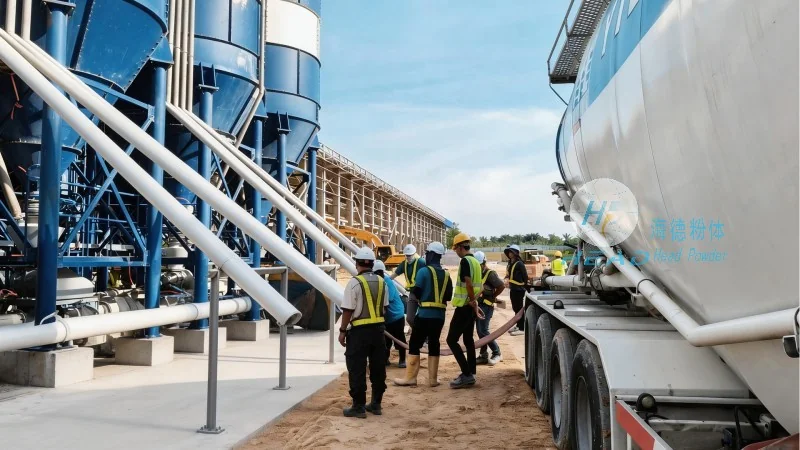
Company Profile: Shandong HeadPowder Engineering Co., Ltd.
Shandong HeadPowder Engineering Co., Ltd., commonly known as headpowder, is a leading manufacturer of specialized equipment for the powder handling industry. With a focus on innovation and quality, the company has developed advanced pneumatic conveying systems tailored to the unique needs of battery manufacturers. Headpowder's equipment is designed to meet the stringent requirements of the battery industry, including high purity standards, efficient material handling, and reliable performance. The company's headquarters is located in Shandong, China, where it operates a state-of-the-art manufacturing facility and research and development center.