

Operation Process and Working Principle of Pneumatic Conveying for Calcium Oxide Powder Material
HeadPowder, a leading provider of industrial material handling solutions, specializes in the design, manufacturing, and implementation of advanced pneumatic conveying systems tailored for calcium oxide powder. This article delves into the operational processes and underlying principles that govern the efficient transport of calcium oxide powder using pneumatic conveying technology, highlighting the technical aspects and practical applications that ensure reliable and consistent material handling in industrial settings.

Company Overview: Shandong HeadPowder Engineering Co., Ltd.
HeadPowder, formally known as Shandong HeadPowder Engineering Co., Ltd., is headquartered in Shandong, China. The company has established itself as a trusted partner in the field of material handling, focusing on innovative solutions that address the unique challenges of transporting fine powders like calcium oxide. With a commitment to quality and customer satisfaction, HeadPowder offers comprehensive services ranging from system design and installation to maintenance and technical support, ensuring that clients receive tailored solutions that meet their specific operational needs.
Understanding Pneumatic Conveying for Calcium Oxide Powder
Pneumatic conveying is a method of transporting bulk materials, such as calcium oxide powder, through a pipeline using a gas stream, typically air. This technology offers several advantages over traditional methods like belt conveyors or bucket elevators, including the ability to handle fine, dusty materials without the need for mechanical contact, which reduces wear and tear and minimizes product contamination. The core principle involves creating a pressure differential within the pipeline, either by using a positive pressure system (where air is forced into the line) or a negative pressure system (where air is drawn out of the line), to move the powder along the path of least resistance.
Key Components of a Pneumatic Conveying System for Calcium Oxide Powder
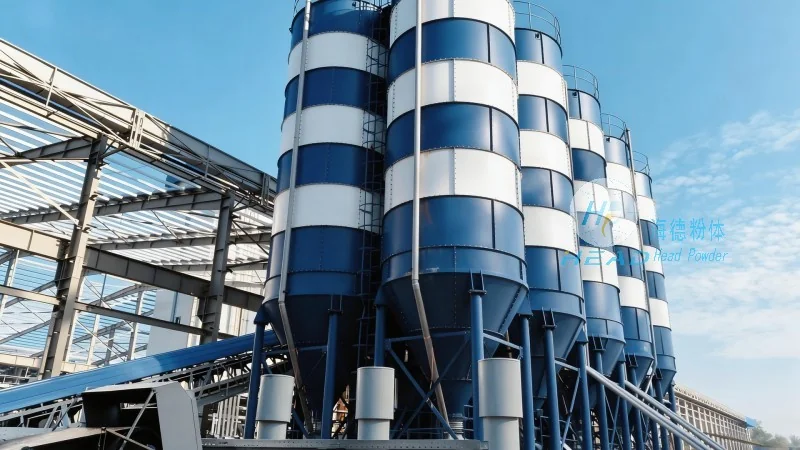
A typical pneumatic conveying system for calcium oxide powder consists of several critical components that work in concert to ensure efficient material transport. These include the material feed hopper, which stores and meters the powder; the air supply system, which provides the necessary pressure or vacuum; the conveying line, which forms the path for the powder and air mixture; and the discharge device, which delivers the material to its final destination. Each component is carefully selected and sized to accommodate the specific characteristics of calcium oxide powder, such as its particle size, density, and flowability, ensuring optimal performance and minimal system downtime.
Operation Process of Pneumatic Conveying for Calcium Oxide Powder
The operation of a pneumatic conveying system for calcium oxide powder involves a series of coordinated steps that ensure the material is transported safely and efficiently. The process typically begins with the material being fed from the hopper into the conveying line. Simultaneously, the air supply system generates the required pressure or vacuum to initiate the conveying process. As the air and powder mixture moves through the pipeline, the powder is suspended and carried along by the gas stream. The system may include intermediate pulse valves or cyclones to separate the powder from the air at various points, ensuring that the material is deposited accurately at the discharge point. The entire process is controlled by a programmable logic controller (PLC) or a similar control system, which monitors parameters such as pressure, flow rate, and material level to maintain optimal operation and prevent system failures.
Working Principle: How Pneumatic Conveying Moves Calcium Oxide Powder
The working principle of pneumatic conveying for calcium oxide powder relies on the fundamental physics of fluid dynamics and particle motion. In a positive pressure system, compressed air is introduced into the conveying line, creating a pressure higher than the ambient air. This pressure differential forces the air and powder mixture to move through the pipeline. The powder particles are entrained by the air stream, and their motion is governed by factors such as the air velocity, particle size, and density. In a negative pressure system, the air is drawn out of the line, creating a vacuum that pulls the powder and air mixture through the pipeline. The choice between positive and negative pressure systems depends on factors such as the distance to be covered, the material's properties, and the desired system configuration. Both systems are designed to maintain the powder in a suspended state, preventing it from settling or clogging the pipeline, which is crucial for the reliable transport of fine powders like calcium oxide.

Advantages of Pneumatic Conveying for Calcium Oxide Powder Handling
Implementing pneumatic conveying systems for calcium oxide powder offers numerous advantages over traditional material handling methods. One of the primary benefits is the ability to handle fine, dusty materials without the need for mechanical contact, which reduces product contamination and extends the lifespan of equipment. Additionally, pneumatic conveying systems are highly flexible, allowing for changes in material flow rates and direction without significant modifications to the infrastructure. The technology also provides better control over the material's temperature and moisture content, which is critical for maintaining the quality of calcium oxide powder. Furthermore, these systems are more energy-efficient compared to some traditional methods, as they minimize the need for moving parts and reduce energy consumption associated with material transport.
Applications and Industries Utilizing Pneumatic Conveying for Calcium Oxide Powder
Pneumatic conveying systems for calcium oxide powder are widely used in various industries that rely on the efficient handling of fine powders. These include the chemical industry, where calcium oxide is used as a raw material in the production of cement, lime, and other chemical products. The food and pharmaceutical industries also benefit from pneumatic conveying systems, as they ensure the safe and hygienic transport of calcium oxide powder, which is often used as a food additive or in pharmaceutical formulations. Additionally, the manufacturing industry utilizes these systems in the production of construction materials, such as concrete and mortar, where calcium oxide plays a vital role in the setting and strength of the final product. In each of these applications, the reliability and efficiency of the pneumatic conveying system are essential to maintaining production rates and product quality.