

Operation Process and Working Principle of Multi-Point Feeding Powder Pneumatic Conveying Machine
Multi-point feeding powder pneumatic conveying machines are advanced industrial equipment designed to efficiently transport bulk powder materials from multiple feeding points to a central collection or processing unit. These systems are widely used in various industries, including chemical, food, pharmaceutical, and mining, where reliable and dust-free material handling is crucial. The technology behind these machines combines pneumatic conveying principles with multi-point feeding mechanisms to achieve high-precision, continuous material transfer, making them an essential solution for modern production lines.

Key Components and Their Functions
The multi-point feeding powder pneumatic conveying system consists of several critical components, each playing a vital role in the overall operation. The primary components include: feeding hoppers, which are strategically placed at multiple points to receive and store the powder material; pneumatic conveying lines, which transport the material through a network of pipes using compressed air or negative pressure; air supply units, such as blowers or vacuum pumps, that generate the necessary air flow; and control systems, which regulate the feeding rate and air pressure to maintain consistent material flow. Additionally, the system may incorporate dust collectors and filter units to ensure environmental compliance and prevent dust contamination.

Operation Process: Step-by-Step Execution
The operation of a multi-point feeding powder pneumatic conveying machine typically follows a sequential process to ensure smooth and efficient material transfer. The steps are as follows: 1. Material Loading: Powder is loaded into each feeding hopper from the source, such as a silo or storage bin. The hoppers are equipped with level sensors to monitor the material volume and trigger feeding when necessary. 2. Air Flow Initiation: The air supply unit is activated, generating either positive pressure (for pressure conveying) or negative pressure (for suction conveying) depending on the system design. The air flow creates a pressure differential that propels the powder forward. 3. Material Transfer: As the air flows through the pipes, it entrains the powder particles, forming a slurry-like mixture that moves from the feeding points to the central receiver or processing equipment. The multi-point feeding design allows simultaneous or sequential feeding from different hoppers, enabling the system to handle varying material volumes and feed rates. 4. Material Discharge: At the end of the conveying line, the powder is separated from the air in the receiver, where it is collected for further processing or storage. The air is then filtered and recycled back to the system to minimize energy consumption and environmental impact.
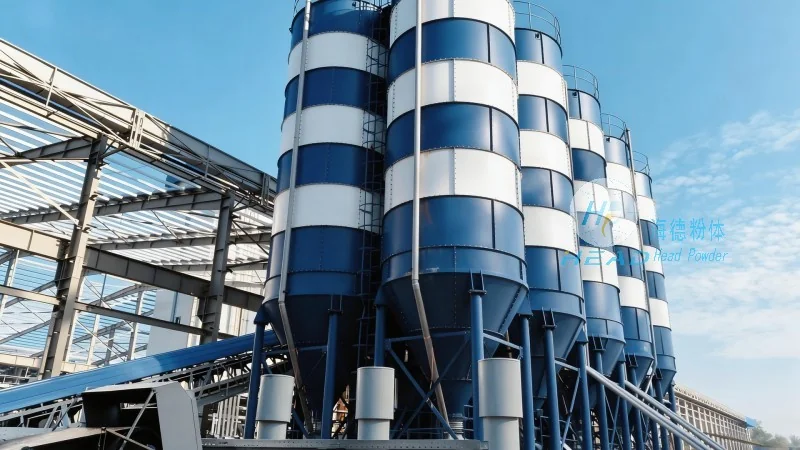
Working Principle: How It Transfers Powder Materials
The working principle of multi-point feeding powder pneumatic conveying machines is based on the fundamental physics of fluid dynamics and particle motion. The core concept is to use air as a carrier medium to transport solid particles. In pressure conveying systems, compressed air is introduced into the conveying line at a high pressure, creating a positive pressure gradient that pushes the powder forward. The air flow velocity is typically maintained above the minimum conveying velocity required to keep the particles suspended and prevent settling. In suction conveying systems, a vacuum is created at the receiver end, drawing the powder and air mixture through the pipes. The multi-point feeding mechanism enhances this principle by distributing the material input from multiple sources, ensuring a balanced and uniform flow. The system's efficiency depends on the proper design of the feeding hoppers, pipe diameters, and air flow rates, which are optimized to minimize pressure drop and energy consumption.

Advantages of Multi-Point Feeding Systems
Multi-point feeding powder pneumatic conveying systems offer several advantages over traditional bulk material handling methods. First, they provide high efficiency and continuous operation, as material can be fed from multiple points simultaneously, reducing downtime and increasing production throughput. Second, the system is dust-free and hygienic, which is critical in industries like food and pharmaceuticals where contamination control is paramount. The enclosed conveying lines prevent dust emissions, improving workplace safety and environmental compliance. Third, the multi-point feeding design allows for flexibility in material handling, as it can accommodate varying feed rates and material types without significant modifications. Additionally, the system is compact and space-saving, as the conveying lines can be routed along the production line, minimizing floor space requirements. Finally, the technology is low-maintenance, with fewer moving parts compared to mechanical conveyors, reducing operational costs and downtime.