

Operation Process and Working Principle of Air-Driven Powder Transport of Anhydrous Sodium Sulfate
HeadPowder, a leading provider in the field, specializes in the efficient and reliable air-driven transport of anhydrous sodium sulfate powder. This technology is crucial for industries requiring precise handling of bulk powders, ensuring minimal loss and optimal process control. The following sections will delve into the operational process and underlying principles of this system.
Company Overview
Shandong HeadPowder Engineering Co., Ltd., operating from China, has established itself as a trusted manufacturer and supplier of advanced powder handling solutions. With a focus on innovation and customer satisfaction, the company delivers high-quality equipment tailored to the specific needs of various industrial applications. The headquarters is located in Shandong, China, where the company’s research and development teams continuously enhance its product offerings.
Understanding the Air-Driven Transport System
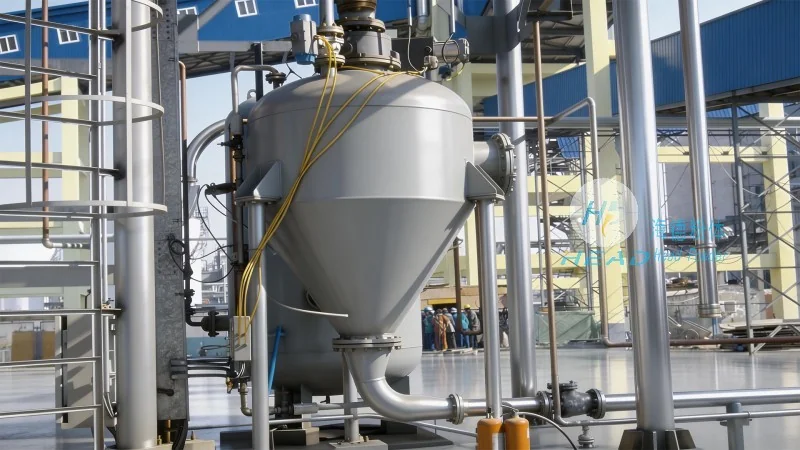
The air-driven transport system for anhydrous sodium sulfate powder involves a combination of mechanical and pneumatic components designed to move bulk material from a source to a destination. This method is particularly advantageous for materials that are prone to caking or require gentle handling, as it minimizes mechanical stress and maintains product integrity throughout the transport process.

Operational Process: Step-by-Step Overview
The operation of the air-driven powder transport system begins with the loading of anhydrous sodium sulfate into a hopper or storage silo. From there, the material is fed into a conveyor system equipped with a rotary valve or feeder, which controls the flow rate. Simultaneously, a blower or compressor generates the necessary air pressure to create a pneumatic flow. The powder is then entrained by the air stream and carried through a pipeline to the receiving vessel or processing unit. The system is designed to maintain consistent air pressure and flow rates, ensuring stable and continuous transport of the powder.
Working Principle: How It Works
The core principle of the air-driven transport system is the use of air as the conveying medium. As the air flows through the pipeline, it creates a low-pressure zone that draws the powder particles into the air stream. This process, known as pneumatic conveying, relies on the interaction between the air velocity and the powder's particle size and density. The system typically operates in either positive or negative pressure modes, depending on the application requirements. Positive pressure systems use a blower to force air and powder through the pipeline, while negative pressure systems use a vacuum to draw the material. For anhydrous sodium sulfate, a positive pressure system is often preferred to prevent moisture ingress and maintain the material's quality.
Key Components and Their Functions
Several critical components contribute to the efficient operation of the air-driven transport system. These include the hopper or silo for material storage, a feeder or rotary valve to regulate the powder flow, a blower or compressor to generate air pressure, a pipeline system for material transport, and a receiver or processing unit for the delivered powder. Each component plays a vital role in ensuring the smooth and reliable transport of anhydrous sodium sulfate, with the blower or compressor being the primary driver of the system's performance.

Benefits of Air-Driven Transport for Anhydrous Sodium Sulfate
Implementing an air-driven transport system for anhydrous sodium sulfate offers several advantages. Firstly, it reduces material handling costs by eliminating the need for manual or mechanical conveying methods. Secondly, it minimizes product loss and contamination, as the system is enclosed and sealed, preventing exposure to external elements. Thirdly, it allows for precise control over the flow rate and pressure, enabling better process integration and automation. Additionally, the system is flexible and can be easily scaled to accommodate varying production volumes, making it suitable for both small-scale and large-scale industrial applications.
Applications and Industries
The air-driven transport of anhydrous sodium sulfate is widely used in various industries, including chemical manufacturing, food processing, and pharmaceuticals. In chemical plants, it is used to transport raw materials to reactors and finished products to storage tanks. In food processing, it is employed to handle sodium sulfate in the production of baking soda and other food additives. In pharmaceuticals, the system ensures the safe and hygienic transport of the powder, maintaining compliance with regulatory standards. The versatility of the air-driven transport system makes it an essential component in many industrial processes that require bulk powder handling.