

Operation Process and Working Principle of Cement Tank Truck Powder Conveying System
For construction projects that require large-scale cement transportation, the cement tank truck powder conveying system has become an essential solution. This system is designed to efficiently transport bulk cement from production sites to construction sites, ensuring smooth and reliable material supply. As a leading provider in the industry, Shandong HeadPowder Engineering Co., Ltd. specializes in the design, manufacturing, and implementation of such systems, offering high-quality equipment tailored to meet diverse project needs.

Overview of the Cement Tank Truck Powder Conveying System
The cement tank truck powder conveying system is a sophisticated setup that integrates multiple components to facilitate the movement of cement powder. It typically includes a cement tank truck equipped with a pneumatic conveying system, a control unit, and various accessories such as hoses, valves, and filters. The system operates by using compressed air to create a pressure differential, which allows cement to be transported from the truck to the destination without the need for manual handling. This not only enhances operational efficiency but also minimizes the risk of dust exposure and material loss.
Step-by-Step Operation Process
The operation of the cement tank truck powder conveying system involves several key steps, each designed to ensure optimal performance and safety. The process begins with the preparation of the system, where the cement tank truck is positioned at the loading or unloading site. The first step is to connect the conveying hoses to the truck's discharge valve and the receiving equipment, such as a silo or a mixing plant. Next, the system is pressurized with compressed air, which is regulated by the control unit to maintain the appropriate pressure levels. Once the system is pressurized, the cement is released from the truck's tank, and the pneumatic conveying process starts. The cement is then transported through the hoses to the receiving point, where it is deposited into the designated storage or processing equipment. After the transfer is complete, the system is depressurized, and the hoses are disconnected. Finally, the truck is prepared for the next delivery, ensuring a seamless cycle of operations.
Working Principle of the Pneumatic Conveying Technology
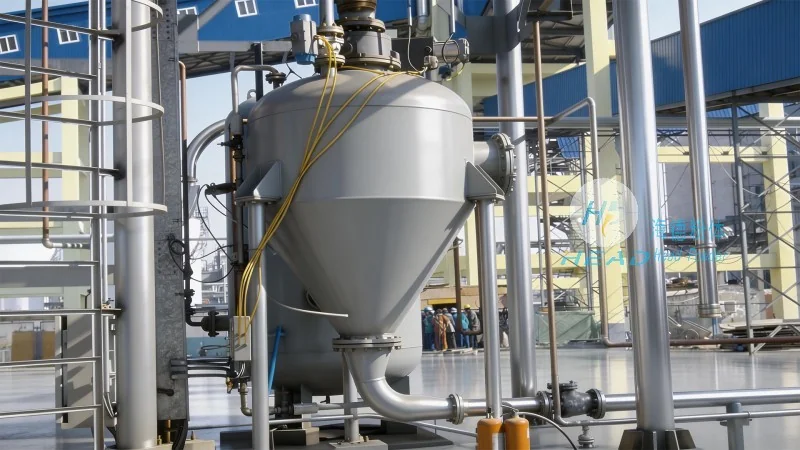
The core of the cement tank truck powder conveying system is the pneumatic conveying technology, which relies on the principles of fluid dynamics to move bulk materials. In this system, compressed air is used as the conveying medium. When air is introduced into the cement tank, it creates a low-pressure environment inside the tank, while the receiving end maintains a higher pressure. This pressure differential causes the cement powder to be drawn into the conveying line and transported to the destination. The system uses a combination of positive and negative pressure stages to ensure efficient and continuous movement of the material. The control unit plays a crucial role in regulating the air flow and pressure, ensuring that the conveying process is smooth and avoids blockages or material degradation. Additionally, the system incorporates filtration and separation mechanisms to prevent dust and moisture from entering the system, maintaining the quality of the cement during transport.
Key Components and Their Functions
Several critical components work together to ensure the effective operation of the cement tank truck powder conveying system. The cement tank truck itself is the primary storage and transport unit, equipped with a hopper and a discharge valve that allows controlled release of the cement. The pneumatic conveying hoses are made of durable materials, such as stainless steel or high-density polyethylene, to withstand the pressure and abrasive nature of the cement powder. The control unit, often a PLC (Programmable Logic Controller), manages the air pressure, flow rate, and timing of the conveying process, ensuring precise operation. Valves are used to regulate the flow of cement and air, while filters and separators prevent dust and impurities from entering the system, maintaining the quality of the cement. The receiving equipment, such as silos or mixers, is designed to accommodate the incoming cement and integrate it into the overall construction process.

Benefits and Advantages of the System
The cement tank truck powder conveying system offers numerous benefits that make it an ideal choice for construction projects. Firstly, it significantly improves operational efficiency by automating the cement transportation process, reducing the time and labor required for manual handling. This leads to faster project completion and lower overall costs. Secondly, the system enhances safety by minimizing the exposure of workers to dust and the risk of material spills, creating a healthier work environment. Thirdly, it ensures consistent and accurate delivery of cement, which is crucial for maintaining the quality of concrete and other construction materials. Additionally, the system is highly adaptable, allowing it to be customized to meet the specific requirements of different projects, whether in urban or remote areas. The use of pneumatic conveying also reduces the need for additional equipment, such as loaders or trucks, simplifying the logistics and reducing operational complexity.
Application Scenarios and Industry Impact
The cement tank truck powder conveying system is widely used in various construction applications, including residential buildings, commercial structures, infrastructure projects, and industrial facilities. In residential construction, it facilitates the delivery of cement to job sites, enabling efficient building of houses and apartments. In commercial projects, such as office buildings and shopping malls, the system ensures timely supply of cement for structural and finishing work. Infrastructure projects, like highways, bridges, and dams, benefit from the system's ability to transport large quantities of cement over long distances, supporting the development of critical public works. Industrial facilities, including factories and power plants, use the system for concrete production and construction, where consistent material quality is essential. The adoption of this technology has had a positive impact on the construction industry by improving productivity, reducing costs, and enhancing safety standards. It has also contributed to the sustainability of construction projects by minimizing material waste and optimizing resource utilization.