

Operation Process and Working Principle of Continuous Pneumatic Conveying Systems
Continuous pneumatic conveying systems represent a sophisticated and efficient method for transporting bulk materials over long distances or within industrial facilities. These systems are widely utilized across various industries, including food processing, pharmaceuticals, chemicals, and mining, due to their ability to handle a wide range of materials while maintaining high levels of cleanliness and operational reliability. The technology behind these systems is rooted in the principles of fluidization and air movement, enabling the seamless transfer of powders, granules, and other particulate materials without the need for mechanical components like belts or screws that may introduce contamination or wear.

Key Components of a Continuous Pneumatic Conveying System
At the core of a continuous pneumatic conveying system are several critical components that work in tandem to ensure efficient material transport. The primary components include a hopper or feed hopper, which serves as the material storage and feeding unit. This hopper is designed to maintain a consistent flow of material into the system, often equipped with a feeder such as a rotary valve or a screw feeder to regulate the discharge rate. The feeder ensures that the material is introduced into the conveying line at a controlled rate, preventing overloading or underloading of the system.
Next, the conveying line itself is a crucial element. It is typically made of stainless steel or other corrosion-resistant materials to accommodate various material types and environmental conditions. The line is equipped with pressure vessels or ducts that facilitate the movement of material through the system. The design of the conveying line, including its diameter and length, is critical for maintaining optimal air velocity and pressure, which directly impacts the system's efficiency and material handling capacity. Additionally, the system may include expansion joints or flexible connectors to accommodate thermal expansion and minimize stress on the components.
Another essential component is the air supply system, which generates the necessary airflow to move the material. This system typically includes a blower or a positive displacement pump that provides the required pressure and volume of air. The air is filtered to remove particulates and moisture, ensuring that the conveying process remains clean and free from contamination. The air supply system is often integrated with a control panel that allows operators to adjust the airflow and pressure as needed, optimizing the system's performance based on the material being transported.
Furthermore, the system may incorporate a separation or collection unit at the discharge end. This unit is responsible for separating the conveyed material from the air stream and collecting it in a receiving hopper or container. The separation process is typically achieved through a cyclone separator or a bag filter, which effectively separates the material from the air. The collected material is then discharged into the receiving container, completing the conveying cycle. The separation unit is designed to minimize air leakage and maintain a clean environment, ensuring that the material remains free from contaminants.
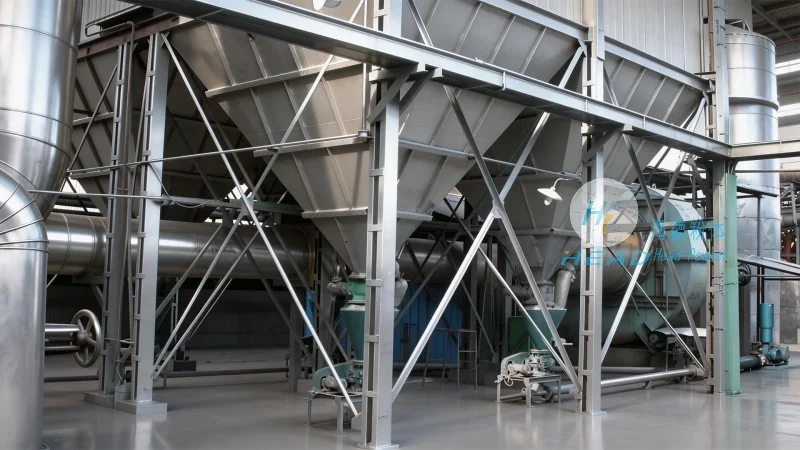
The Working Principle of Continuous Pneumatic Conveying
The operation of a continuous pneumatic conveying system is based on the principle of fluidization, where the material is suspended in a stream of air and transported through the conveying line. The process begins with the material being fed from the hopper into the conveying line at a controlled rate. The feeder ensures that the material is introduced into the line in a consistent manner, preventing blockages or uneven flow. As the material enters the conveying line, the air from the blower is introduced, creating a high-velocity air stream that lifts and suspends the material particles.
The air velocity within the conveying line is maintained at a level that is sufficient to keep the material particles suspended but not so high as to cause excessive pressure drop or energy consumption. The pressure in the system is typically maintained at a positive pressure, which helps to prevent the ingress of external air and maintain the integrity of the material flow. The material particles are carried along the conveying line by the air stream, moving from the feed hopper to the discharge point.
As the material travels through the system, it may encounter various components such as bends, elbows, or expansion sections. These components are designed to minimize pressure loss and maintain the stability of the material-air mixture. The bends and elbows are typically equipped with smooth transitions to prevent material buildup or blockages, which could disrupt the conveying process. The expansion sections are used to reduce the air velocity and allow the material to settle and be collected at the discharge end.
At the discharge end, the material is separated from the air stream using a cyclone separator or a bag filter. The cyclone separator works by using centrifugal force to separate the material from the air, while the bag filter uses a mesh or fabric to trap the particles. The separated material is then collected in a receiving hopper or container, completing the conveying cycle. The air, now free of material particles, is typically recirculated back to the blower or released into the atmosphere, depending on the system design and environmental regulations.

Advantages of Continuous Pneumatic Conveying Systems
Continuous pneumatic conveying systems offer several advantages over traditional mechanical conveying methods. One of the primary advantages is the ability to handle a wide range of materials, including powders, granules, and bulk solids. The system can transport materials with varying particle sizes, shapes, and densities without the need for adjustments or modifications. This versatility makes it suitable for diverse industrial applications.
Another significant advantage is the high level of cleanliness and hygiene maintained throughout the conveying process. Since the material is transported in an enclosed system, there is no risk of contamination from external sources or cross-contamination between different materials. This is particularly important in industries such as food and pharmaceuticals, where product purity is critical. The stainless steel construction of the conveying line and components further enhances the hygienic design, making it easy to clean and maintain.
The system also offers improved efficiency and energy savings compared to mechanical conveying methods. By using air as the conveying medium, the system eliminates the need for moving parts like belts or screws, which can wear out and require frequent maintenance. The absence of mechanical components reduces the overall energy consumption and operational costs, as there are no friction losses or power requirements for moving parts. Additionally, the continuous operation of the system allows for a steady and consistent flow of material, minimizing downtime and maximizing productivity.
Furthermore, continuous pneumatic conveying systems provide flexibility in terms of layout and installation. The system can be configured to handle long-distance transport or to move material within a facility, with the ability to add or remove sections as needed. The modular design of the components allows for easy expansion or modification of the system to accommodate changing production requirements. This flexibility makes it an ideal solution for industries that require adaptable and scalable material handling solutions.
Applications and Industries
Continuous pneumatic conveying systems are widely used across various industries due to their versatility and efficiency. In the food industry, these systems are commonly used to transport ingredients such as flour, sugar, and spices, ensuring that the materials remain clean and free from contamination. The hygienic design of the system makes it suitable for food processing applications, where product safety is paramount.

In the pharmaceutical industry, continuous pneumatic conveying is used to handle active pharmaceutical ingredients (APIs) and other sensitive materials. The enclosed system and stainless steel construction ensure that the materials are not exposed to external contaminants, maintaining the purity and quality of the products. The system's ability to handle fine powders and granules is particularly beneficial in pharmaceutical manufacturing, where precision and consistency are critical.
In the chemical industry, these systems are used to transport various chemicals, including powders, granules, and bulk solids. The system's ability to handle corrosive or abrasive materials makes it suitable for chemical processing applications. The positive pressure design of the system prevents the ingress of air and moisture, ensuring that the materials remain stable and free from degradation.
In the mining and minerals industry, continuous pneumatic conveying is used to transport raw materials such as ores, coal, and minerals. The system's high capacity and ability to handle large volumes of material make it ideal for mining operations. The system can transport materials over long distances, reducing the need for manual handling and improving operational efficiency.
Conclusion
Continuous pneumatic conveying systems represent a highly efficient and versatile method for transporting bulk materials in various industrial applications. The technology, developed and manufactured by companies like Shandong HeadPowder Engineering Co., Ltd., offers numerous advantages over traditional mechanical conveying methods, including improved cleanliness, energy efficiency, and flexibility. By understanding the key components, working principles, and advantages of these systems, industries can make informed decisions about implementing continuous pneumatic conveying solutions to enhance their material handling processes and improve overall operational performance.