

Principle and Working Scene Characteristics of Gypsum Sand Material Handling Systems
Shandong HeadPowder Engineering Co., Ltd., a leading enterprise based in Shandong, China, specializes in the design, manufacturing, and implementation of advanced material handling solutions. Among their core offerings is the gypsum sand material handling system, a sophisticated equipment designed to efficiently transport and manage gypsum sand, a crucial raw material in various industrial applications. This system integrates cutting-edge technology and robust engineering to ensure optimal performance, reliability, and adaptability in diverse operational environments.
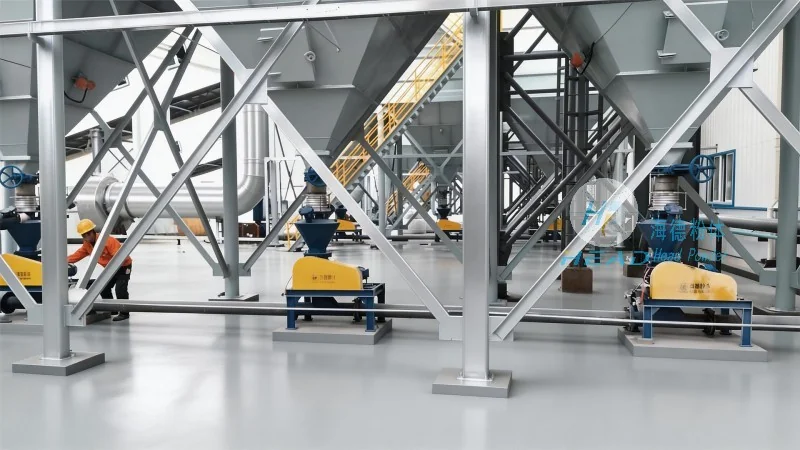
Principle of Gypsum Sand Material Handling Systems
The fundamental principle of the gypsum sand material handling system revolves around the seamless integration of mechanical components and control mechanisms to facilitate the movement of gypsum sand from one location to another. The system typically comprises key elements such as conveyor belts, feeding mechanisms, and control panels, all working in harmony to ensure smooth material flow. The conveyor belt, often made from durable materials like rubber or polyurethane, is designed to withstand the abrasive nature of gypsum sand, preventing wear and tear over extended periods of operation. The feeding mechanism, which may include hoppers or feeders, ensures a consistent and controlled supply of gypsum sand into the conveyor system, minimizing material loss and optimizing throughput. The control panel, equipped with sensors and automation features, monitors the system's performance in real-time, allowing for immediate adjustments to maintain efficiency and safety. This integrated approach ensures that the system operates with high precision, reducing downtime and enhancing overall productivity.

Working Scene Characteristics of Gypsum Sand Material Handling Systems
The working scene characteristics of gypsum sand material handling systems are tailored to meet the specific demands of industrial applications where gypsum sand is a primary component. These systems are commonly employed in industries such as construction, cement production, and chemical processing, where the efficient handling of bulk materials is critical. In construction sites, the system facilitates the transportation of gypsum sand from storage areas to mixing stations, ensuring a steady supply for plaster and drywall production. In cement plants, the system plays a vital role in moving gypsum sand from raw material storage to the grinding and mixing stages, contributing to the production of high-quality cement. The adaptability of the system allows it to operate in various environmental conditions, from indoor industrial facilities to outdoor construction sites, with minimal adjustments to the equipment. The system's design also considers safety and operational efficiency, incorporating features like overload protection and emergency stop mechanisms to prevent accidents and ensure smooth operation. Additionally, the system's modular construction enables easy integration with existing production lines, reducing installation time and costs. This flexibility makes the gypsum sand material handling system a versatile solution for diverse industrial needs.
Key Features and Advantages
Shandong HeadPowder Engineering Co., Ltd.'s gypsum sand material handling system is equipped with several key features that enhance its performance and reliability. The system's robust construction ensures durability and long service life, even under heavy operational loads. The use of high-quality materials in the conveyor belt and other components minimizes maintenance requirements, reducing operational costs for users. The system's automation capabilities, including real-time monitoring and control, improve operational efficiency and reduce the need for manual intervention. This not only increases productivity but also enhances safety by minimizing human error. The system's adaptability allows it to handle varying material characteristics, such as different particle sizes and moisture content, without compromising performance. Furthermore, the system's energy-efficient design reduces power consumption, contributing to lower operational costs and environmental sustainability. These features collectively make the gypsum sand material handling system an ideal choice for industries seeking reliable and efficient material handling solutions.

Application Scenarios and Operational Benefits
The gypsum sand material handling system is widely used in various industrial scenarios, offering significant operational benefits to users. In the construction industry, the system streamlines the process of transporting gypsum sand from storage to mixing sites, improving workflow efficiency and reducing labor costs. The consistent supply of material ensures that construction projects progress smoothly without delays caused by material shortages. In cement production, the system plays a crucial role in maintaining the quality and consistency of the final product by ensuring uniform material handling. This leads to higher product quality and customer satisfaction. The system's ability to handle bulk materials in large quantities also reduces the need for frequent material replenishment, saving time and resources. Additionally, the system's compact design allows for installation in limited spaces, making it suitable for both new and existing industrial facilities. The operational benefits of the system extend to cost savings, as reduced maintenance and energy consumption contribute to lower overall operational expenses. Overall, the gypsum sand material handling system provides a reliable and efficient solution for industries that rely on gypsum sand as a key raw material.