

Principle and Working Scene Characteristics of Ammonium Nitrate Pneumatic Conveying Lines
Ammonium nitrate is a widely used chemical compound in various industrial applications, particularly in the production of fertilizers and explosives. The efficient and safe transportation of this material is crucial for maintaining production efficiency and ensuring workplace safety. Pneumatic conveying systems, specifically designed for ammonium nitrate, offer a reliable solution to handle the material's unique properties. Shandong HeadPowder Engineering Co., Ltd., a leading provider in the field, specializes in the design and implementation of such systems to meet the diverse needs of industrial clients. This article explores the fundamental principles of ammonium nitrate pneumatic conveying lines and highlights the key characteristics of their operational environments.

Introduction to Ammonium Nitrate Pneumatic Conveying Systems
Ammonium nitrate (AN) is a white crystalline solid that is hygroscopic and can be prone to caking under certain conditions. Traditional bulk material handling methods, such as belt conveyors or bucket elevators, may not be suitable for AN due to its tendency to adhere to surfaces or form lumps. Pneumatic conveying systems provide an alternative by using air to transport the material through a pipeline network. These systems can operate under either positive pressure (where air is forced through the line) or negative pressure (where air is drawn out of the line). The choice of system depends on factors like the distance of transport, the volume of material, and the need for dust control.
Principle of Pneumatic Conveying for Ammonium Nitrate
The core principle of pneumatic conveying involves the use of air to create a flow of material within a closed pipeline. In a positive pressure system, a blower or compressor generates high-pressure air that pushes the material forward. The air velocity must be sufficient to overcome the gravitational and frictional forces acting on the particles, ensuring that the material remains suspended and moves smoothly through the line. For ammonium nitrate, which has a relatively low bulk density and can be abrasive, the design of the conveying line—including the size of the pipeline, the type of air nozzles, and the material of construction—is critical to prevent blockages and maintain system efficiency.

Working Scene Characteristics of Ammonium Nitrate Pneumatic Conveying Lines
The operational environments where ammonium nitrate pneumatic conveying lines are applied vary significantly based on the specific industry and application. In fertilizer manufacturing plants, these systems are commonly used to transport AN from storage silos to processing units or packaging lines. The working scene typically involves large-scale production with high throughput requirements, requiring robust and reliable equipment that can handle continuous operation over extended periods. The presence of dust and the need for explosion-proof designs are also key considerations in such industrial settings.
In the context of chemical storage and handling facilities, pneumatic conveying lines may be employed to transfer AN between different storage vessels or to load/unload trucks and railcars. These applications often involve shorter distances but require precise control over the material flow to avoid overfilling or spills. The working scene in this case includes safety protocols for handling potentially hazardous materials, such as proper ventilation and emergency shutdown systems.
Key Features and Advantages in Operational Environments
Ammonium nitrate pneumatic conveying lines offer several advantages that make them well-suited for specific working environments. One of the primary benefits is the ability to transport material in a closed system, which minimizes dust exposure and reduces the risk of contamination. This is particularly important in industries where product purity is critical, such as in the production of high-quality fertilizers. Additionally, pneumatic conveying systems can be designed to operate in both indoor and outdoor settings, providing flexibility in facility layout and expansion.
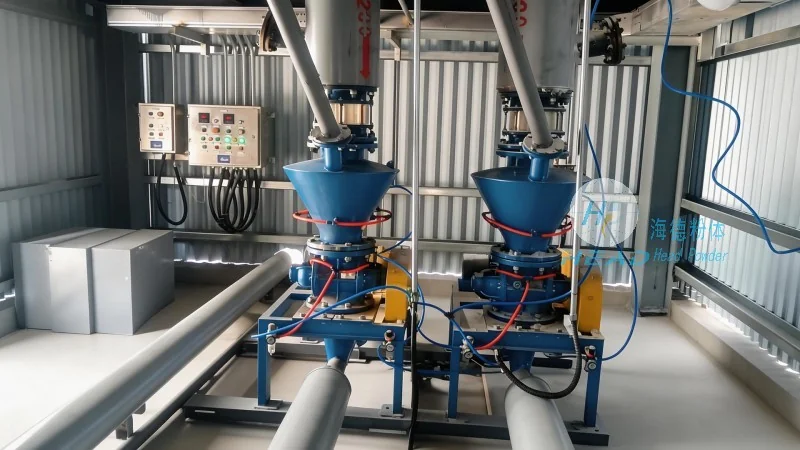
Another advantage is the reduced need for manual handling, which enhances workplace safety by minimizing the risk of accidents associated with moving bulk materials. The systems are also relatively compact compared to traditional conveyor systems, allowing for easier integration into existing production lines or new facility designs. However, the operational environment must be carefully managed to ensure that the system operates within its design parameters, as excessive pressure or air velocity can lead to material degradation or equipment wear.
Conclusion
Ammonium nitrate pneumatic conveying lines are essential components in the efficient and safe handling of this critical chemical. By understanding the principles of pneumatic conveying and the characteristics of the working environments where these systems are applied, industries can optimize their material transport processes. The robust design and adaptability of these systems make them a preferred choice for applications ranging from large-scale fertilizer production to specialized chemical handling. As demand for ammonium nitrate continues to grow, the importance of reliable and efficient conveying systems will only increase, ensuring that production remains efficient and workplace safety is maintained.