

What is an Additive Pneumatic Conveying System? And What Are Its Design Principles?
When it comes to efficiently transporting bulk materials, especially in industries dealing with additives, the choice of equipment can significantly impact operational efficiency and product quality. A key technology in this field is the additive pneumatic conveying system, which offers a reliable solution for moving powders and granules from one location to another. This article aims to explore what an additive pneumatic conveying system is and delve into its fundamental design principles, providing a comprehensive understanding for those considering such equipment for their industrial processes.

Understanding the Additive Pneumatic Conveying System
An additive pneumatic conveying system is a type of material handling equipment designed to transport dry bulk materials, such as powders and granules, through a pipeline using compressed air or other gases. The system is particularly well-suited for transporting additives, which are often used in various industrial applications to enhance the properties of the main product. These additives can include chemicals, pigments, flavors, or other specialized components that require precise and controlled movement to avoid contamination or degradation.
The core components of an additive pneumatic conveying system typically include a hopper for material storage, a feeder to control the flow rate, a conveying line (usually made of metal or plastic), and a receiver for the discharged material. The system operates by creating a pressure differential within the pipeline, either by using a positive pressure (blowing air into the line) or a negative pressure (sucking air out of the line). This pressure differential propels the material along the pipeline, ensuring a smooth and continuous flow.

Key Design Principles of Additive Pneumatic Conveying Systems
The design of an effective additive pneumatic conveying system is based on several critical principles that ensure optimal performance, reliability, and safety. These principles are tailored to handle the specific characteristics of additives, such as their particle size, density, moisture content, and flowability. The primary design considerations include:
1. Material Compatibility and Flow Characteristics: The system must be designed to accommodate the unique flow properties of the additive. For example, some additives may be cohesive or have a tendency to agglomerate, which can affect the conveying efficiency. The design may incorporate features like vibration feeders or air classifiers to ensure consistent material flow and prevent blockages.
2. Pressure and Velocity Control: Maintaining the right pressure and velocity within the conveying line is crucial. Excessive pressure can lead to material degradation or equipment wear, while insufficient pressure may cause the material to settle or clog the pipeline. The system design includes pressure regulators and flow meters to monitor and adjust these parameters in real-time, ensuring stable operation.
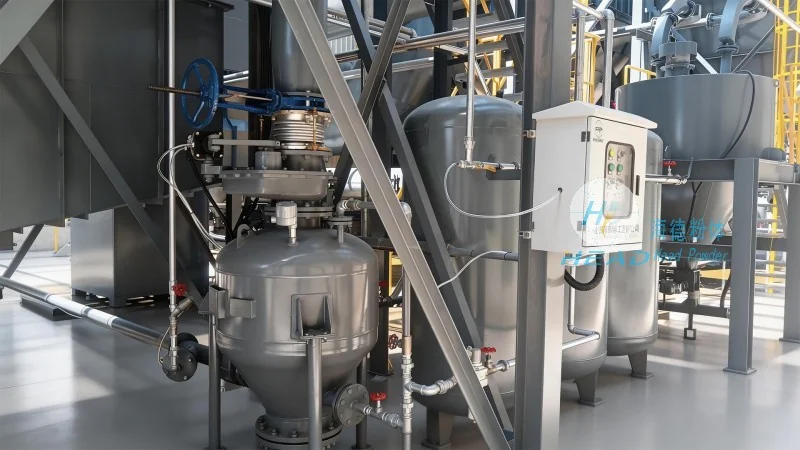
3. System Layout and Pipeline Design: The layout of the conveying system, including the length and number of bends in the pipeline, directly impacts the conveying efficiency. Long or complex pipelines may require additional boosters or cyclones to maintain the material's momentum. The design also considers the vertical and horizontal distances between the source and destination, optimizing the system for minimal energy consumption and maximum material throughput.
4. Safety and Environmental Considerations: Given that additives are often used in sensitive applications, the system must adhere to strict safety and environmental standards. This includes features like explosion-proof components for flammable additives, dust collection systems to prevent air pollution, and leak detection mechanisms to ensure the integrity of the conveying process. The design also focuses on minimizing product loss and contamination, which is critical for maintaining product quality.
Applications and Benefits of Additive Pneumatic Conveying Systems
Additive pneumatic conveying systems are widely used across various industries, including pharmaceuticals, food processing, chemicals, and cosmetics. The benefits of using such systems include improved process control, reduced labor costs, enhanced product safety, and increased operational efficiency. By automating the material handling process, these systems help manufacturers achieve higher throughput and better product consistency, which are essential for meeting market demands and regulatory requirements.

For instance, in the pharmaceutical industry, the precise handling of additives is critical to ensure the quality and efficacy of medications. A well-designed pneumatic conveying system can prevent cross-contamination and maintain the integrity of the active ingredients, thereby meeting stringent quality standards. Similarly, in the food industry, the system can handle flavorings and colorants without exposing them to external contaminants, preserving the product's taste and appearance.
Conclusion
In conclusion, an additive pneumatic conveying system is a sophisticated and efficient solution for transporting bulk materials, particularly additives, in industrial settings. The design principles outlined above, focusing on material compatibility, pressure control, system layout, and safety, are essential for building a reliable and high-performance system. By understanding these principles and leveraging the expertise of manufacturers like Shandong HeadPowder Engineering Co., Ltd., industries can enhance their material handling capabilities and achieve greater operational success.