

Main Structures of Calcium Hydroxide Powder Pneumatic Conveying
When considering the efficient and reliable transportation of calcium hydroxide powder, understanding the core structural components of pneumatic conveying systems is essential. These systems are designed to handle the unique properties of calcium hydroxide, which includes its fine particle size and potential for caking. The main structures involved in such systems are crucial for ensuring optimal performance, minimizing material loss, and maintaining system integrity.

1. Feed Hopper and Material Preparation System
The feed hopper is the initial component where calcium hydroxide powder is stored and prepared for conveyance. It typically features a design that minimizes material bridging and agglomeration, which are common issues with fine powders like calcium hydroxide. The hopper may include a rotary valve or a gate valve at the discharge end to control the flow rate of the material into the conveying line. Additionally, some systems incorporate a pre-drying or conditioning section to adjust the moisture content of the powder, which can improve flow characteristics and reduce the risk of blockages.
2. Conveying Line and Pipeline Design
The conveying line, often made of stainless steel or other corrosion-resistant materials, is a critical structure for transporting calcium hydroxide powder. The pipeline design must account for the powder's abrasive nature and potential for scaling. To prevent material buildup and ensure smooth flow, the pipeline may include internal coatings or special surface treatments. The line is usually arranged in a straight or slightly inclined path to facilitate gravity-assisted flow, reducing the energy required for air-driven transport. Additionally, the use of flexible connectors and expansion joints is common to accommodate thermal expansion and minimize stress on the system.
3. Air Supply and Compressor System
The air supply system, including the compressor and air treatment components, is vital for generating the necessary pressure and airflow to move calcium hydroxide powder through the conveying line. The compressor must be capable of delivering a consistent air volume and pressure, which is essential for maintaining the velocity of the powder-air mixture. Air treatment equipment, such as filters and dryers, is often included to remove contaminants and control humidity, as moisture can affect the flowability of calcium hydroxide and lead to corrosion in the system.
4. Dust Collection and Filtration System
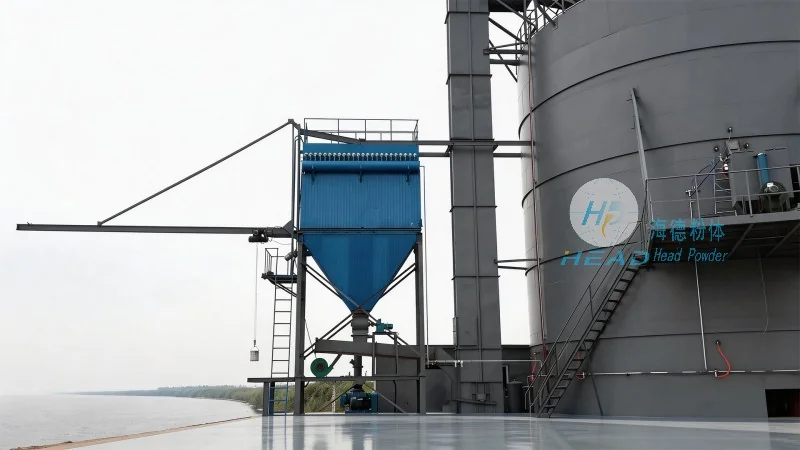
Due to the fine nature of calcium hydroxide powder, a dust collection and filtration system is necessary to prevent airborne particulates from escaping into the environment and to protect downstream equipment. This system typically includes a cyclone separator or a baghouse filter, which captures the powder and returns it to the conveying line or a collection bin. The design of the filtration system must be compatible with the material's properties, ensuring that it can handle the abrasive and potentially corrosive nature of calcium hydroxide without degradation.

5. Discharge and Material Handling System
The discharge system is responsible for delivering the calcium hydroxide powder to its final destination, such as a storage silo or processing equipment. It may include a rotary valve, a gate valve, or a pneumatic receiver that controls the flow of material out of the conveying line. The discharge point is often designed to minimize pressure drop and prevent material re-entrainment, which can occur if the discharge velocity is too high. Additionally, some systems incorporate a material conditioning or blending section to adjust the powder's properties before it is used in downstream processes.
6. Control and Monitoring Systems
Modern pneumatic conveying systems for calcium hydroxide powder often include advanced control and monitoring systems to optimize performance and ensure safety. These systems may include sensors for measuring pressure, flow rate, and temperature, as well as control valves and automation software to regulate the operation of the system. The control system can adjust the air pressure, flow rate, and material feed rate in real-time, based on feedback from the sensors, to maintain optimal conveying conditions. Additionally, monitoring systems can detect potential issues, such as blockages or pressure drops, and trigger alarms or automatic shutdown procedures to prevent system damage or material loss.