

Main Air-Pneumatic Conveying Structures for Gray Calcium Powder
When it comes to efficiently handling gray calcium powder, the choice of air-pneumatic conveying systems is critical. These systems offer a reliable and cost-effective solution for transporting bulk materials like gray calcium powder over short to medium distances. Understanding the key structural components and configurations is essential for optimizing performance and ensuring smooth operation. This article explores the main air-pneumatic conveying structures commonly used in the industry, focusing on their design, functionality, and application in the context of gray calcium powder handling, with a focus on solutions provided by Shandong HeadPowder Engineering Co., Ltd.
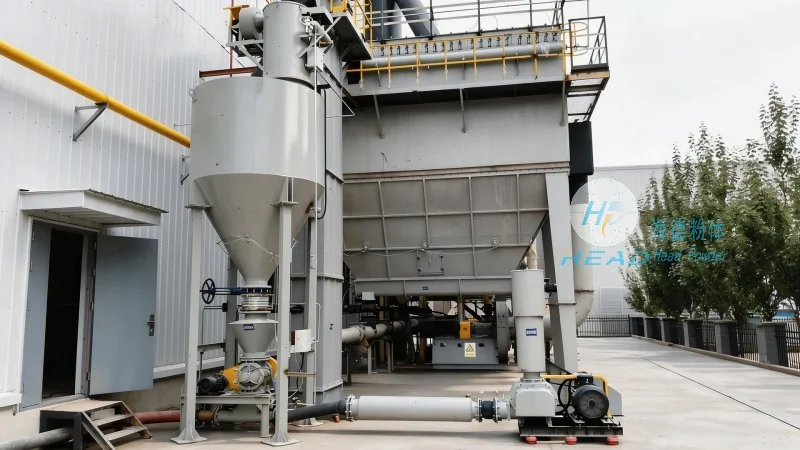
Key Components of Air-Pneumatic Conveying Systems
The air-pneumatic conveying system for gray calcium powder typically consists of several core components that work in tandem to ensure efficient material transport. The primary elements include the material feed hopper, which holds the gray calcium powder and provides a controlled feed to the system. The feed hopper is equipped with a rotary valve or a star feeder to regulate the flow of material into the conveying line, preventing blockages and maintaining consistent feed rates. This component is crucial for maintaining the integrity of the material and ensuring a steady supply to the downstream equipment.
Next, the conveying line itself, which can be either a positive or negative pressure system. Positive pressure systems use a blower or compressor to force air and material through the pipeline, while negative pressure systems use a vacuum pump to draw material and air into the system. For gray calcium powder, a positive pressure system is often preferred as it provides better control over the material flow and reduces the risk of dust emissions. The conveying line is usually made of stainless steel or other corrosion-resistant materials to withstand the abrasive nature of gray calcium powder and to maintain hygiene standards.
At the receiving end, the material is deposited into a collection bin or silo. The collection bin is designed to accommodate the volume of gray calcium powder being conveyed and is equipped with a discharge valve or a rotary valve to control the release of material. Some systems may also include a dust collection system, such as a cyclone separator or a baghouse filter, to capture any fine particles and prevent environmental contamination. These components are essential for maintaining air quality and complying with environmental regulations.
Types of Air-Pneumatic Conveying Structures
There are several types of air-pneumatic conveying structures commonly used for gray calcium powder. The most common is the dense phase conveying system, which operates at a lower air velocity and higher material concentration. This system is ideal for handling abrasive materials like gray calcium powder, as it reduces wear and tear on the equipment and minimizes material degradation. The dense phase system typically uses a pressure drop in the pipeline to control the flow rate and prevent material segregation.

Another type is the dilute phase conveying system, which operates at a higher air velocity and lower material concentration. This system is suitable for shorter distances and lighter materials, but may not be as effective for gray calcium powder due to its higher density and potential for particle segregation. The dilute phase system is often used in conjunction with a positive pressure blower and a cyclone separator to separate the material from the air.
A third type is the hybrid system, which combines elements of both dense and dilute phase conveying. This system is designed to provide flexibility in handling different material types and flow rates. The hybrid system typically uses a combination of a blower and a vacuum pump to control the air flow and material transport. It is often used in applications where the distance and material characteristics vary, such as in industrial plants handling gray calcium powder.
Design Considerations for Gray Calcium Powder Conveying
When designing an air-pneumatic conveying system for gray calcium powder, several factors must be considered to ensure optimal performance. The first is the material characteristics, including the particle size, density, and moisture content. Gray calcium powder typically has a particle size ranging from 0.1 to 2 millimeters and a density of around 2.5 grams per cubic centimeter. The moisture content is usually low, but can vary depending on the source of the material. These characteristics affect the flowability and abrasiveness of the material, which in turn influences the choice of equipment and system design.
Another important consideration is the conveying distance and the required flow rate. The distance between the feed point and the receiving point determines the type of system to use, with longer distances requiring more powerful blowers or vacuum pumps. The flow rate is determined by the production capacity and the required throughput of the system. It is essential to calculate the required air volume and pressure to ensure that the system can handle the desired flow rate without excessive energy consumption or material degradation.

Material handling and safety are also critical considerations. Gray calcium powder can be a respiratory hazard if inhaled, and the system must be designed to minimize dust emissions. The use of a dust collection system and proper ventilation is essential to maintain a safe working environment. Additionally, the equipment must be designed to handle the abrasive nature of the material, with components such as the conveying line, feed hopper, and discharge valve made of corrosion-resistant materials to prevent wear and tear.
Applications and Benefits of Air-Pneumatic Conveying for Gray Calcium Powder
Air-pneumatic conveying systems are widely used in various industries for handling gray calcium powder, including construction, manufacturing, and chemical processing. In the construction industry, gray calcium powder is used as a raw material for cement and concrete production. The air-pneumatic conveying system allows for efficient transport of the material from storage silos to the production line, reducing the need for manual handling and improving safety. In the manufacturing industry, gray calcium powder is used in the production of paints, coatings, and adhesives. The system helps to maintain consistent material quality and reduces the risk of contamination.
The benefits of using air-pneumatic conveying systems for gray calcium powder are numerous. First, it provides a clean and dust-free environment, which is essential for maintaining product quality and complying with environmental regulations. Second, it reduces labor costs by eliminating the need for manual handling and loading of material. Third, it improves safety by minimizing the risk of accidents and exposure to hazardous materials. Fourth, it increases efficiency by reducing downtime and improving the overall throughput of the system.
Finally, the use of air-pneumatic conveying systems for gray calcium powder offers long-term cost savings. By reducing energy consumption and minimizing equipment wear and tear, the system can lower operational costs over its lifespan. Additionally, the system can be easily scaled to meet changing production demands, making it a flexible and cost-effective solution for handling gray calcium powder. Shandong HeadPowder Engineering Co., Ltd. specializes in providing tailored air-pneumatic conveying solutions that meet the specific needs of gray calcium powder handling applications, ensuring optimal performance and reliability. With their expertise in material handling and system design, they help clients achieve efficient, safe, and cost-effective transport of gray calcium powder in various industrial settings.