

Carbon Technical Parameters and Conveying System Process
Shandong HeadPowder Engineering Co., Ltd., a professional enterprise based in Shandong, China, specializes in the research, development, and application of carbon materials and their associated conveying systems. The company, commonly known as headpowder, focuses on providing comprehensive technical solutions tailored to the unique requirements of carbon material handling and processing. This article delves into the key technical parameters of carbon materials and the advanced processes involved in their conveying systems, offering insights into the engineering principles and practical applications that underpin efficient carbon material management.

Core Technical Parameters of Carbon Materials
Understanding the fundamental technical parameters of carbon materials is essential for optimizing their performance in various industrial applications. These parameters include but are not limited to density, porosity, thermal conductivity, and mechanical strength. The density of carbon materials, typically ranging from 1.5 to 2.0 g/cm³ for common grades, directly impacts their bulk handling characteristics and storage requirements. Porosity, which can vary from 10% to 90% depending on the manufacturing process, influences properties such as surface area and gas permeability, critical for applications in filtration, adsorption, and catalysis. Thermal conductivity, often measured in the range of 2 to 200 W/(m·K), affects heat transfer efficiency in processes like carbonization and thermal treatment. Mechanical strength, including tensile and compressive strength, determines the material's suitability for structural or load-bearing applications. By precisely characterizing these parameters, engineers can select the most appropriate carbon material for specific industrial needs, ensuring optimal performance and cost-effectiveness.

Conveying System Process Overview
The conveying system for carbon materials is designed to handle the unique physical properties of these materials, such as their lightweight nature, potential dust generation, and varying particle sizes. A typical conveying system for carbon materials includes several key components: a feeding mechanism, a conveying medium (often air or a combination of air and inert gases), and a control system. The feeding mechanism, which may include hoppers, vibrators, or screw feeders, ensures a consistent and controlled flow of carbon material into the system. The conveying medium, typically air under controlled pressure and temperature, transports the material through a network of pipes or ducts. The control system monitors and adjusts parameters such as air flow rate, pressure, and temperature to maintain stable material transport and prevent issues like blockages or material degradation. Advanced systems may incorporate features like dust collection and filtration to ensure environmental compliance and material purity. The process of conveying carbon materials involves careful consideration of material characteristics, system design, and operational parameters to achieve efficient and reliable material handling.
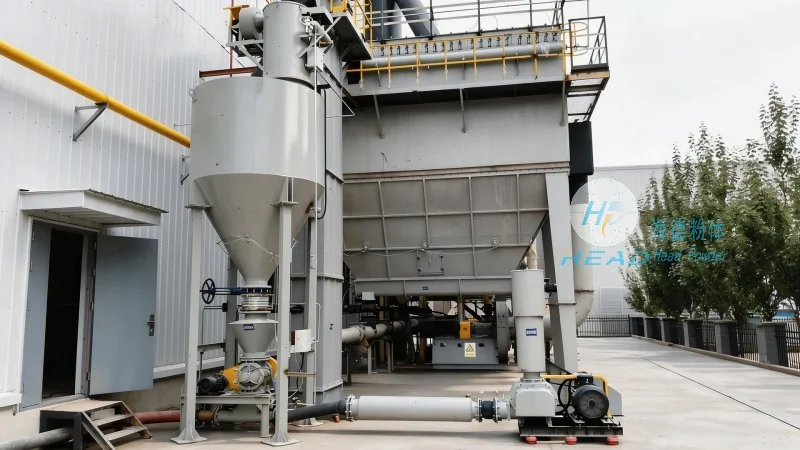
Key Process Steps in Carbon Material Conveying
The conveying process for carbon materials typically involves several sequential steps, each critical to the overall efficiency and safety of the operation. The first step is material preparation, which may include screening, crushing, or blending to achieve the desired particle size distribution. This step ensures that the material flows uniformly and does not cause blockages in the conveying system. The second step is feeding, where the prepared material is introduced into the conveying system at a controlled rate. The third step is transport, where the material is carried through the system by the conveying medium. The fourth step is deposition or discharge, where the material is delivered to its final destination, such as a storage silo, processing unit, or packaging area. Each step requires precise control to maintain the integrity of the carbon material and prevent contamination or degradation. For example, in high-temperature applications, the conveying system must be designed to withstand elevated temperatures and prevent heat loss or material oxidation. In dust-sensitive applications, the system must incorporate effective dust collection and filtration to protect both the environment and the material quality. By following these key process steps, the conveying system ensures that carbon materials are handled safely, efficiently, and in compliance with industry standards.

Technical Considerations for Efficient Conveying
Several technical considerations are essential for ensuring the efficient and reliable operation of carbon material conveying systems. One critical factor is the selection of the appropriate conveying medium. Air is commonly used due to its low cost and ease of handling, but in applications involving reactive or sensitive materials, inert gases like nitrogen or argon may be required to prevent oxidation or other chemical reactions. The flow rate of the conveying medium is another important parameter, as it directly affects the material's velocity and the risk of blockages. Higher flow rates can increase material velocity but may also lead to increased energy consumption and potential wear on system components. The particle size distribution of the carbon material is also a key factor, as larger particles may require higher flow rates or different conveying mechanisms to ensure smooth transport. Additionally, the system must be designed to handle variations in material properties, such as changes in moisture content or bulk density, which can affect flow characteristics. Regular maintenance and monitoring of the conveying system are also essential to ensure optimal performance and prevent downtime. By addressing these technical considerations, engineers can design and operate conveying systems that meet the specific needs of carbon material handling, maximizing efficiency and minimizing operational costs.