

Design of a Negative Pressure Pneumatic Conveying System for Mica Sand
HeadPowder, a leading engineering firm based in Shandong, China, specializes in the design and implementation of advanced material handling solutions. The company's expertise lies in creating efficient and reliable systems for transporting various powders and granular materials, including specialized applications like mica sand. This article focuses on the design of a negative pressure pneumatic conveying system tailored for mica sand, highlighting the technical considerations, operational principles, and practical applications of such a system.

Company Profile and Expertise
Shandong HeadPowder Engineering Co., Ltd., operating under the brand name HeadPowder, is a reputable engineering company headquartered in Shandong, China. With a strong background in industrial engineering and material handling, HeadPowder has developed a comprehensive portfolio of solutions for diverse industries. The company's team of experienced engineers and technicians is dedicated to delivering high-quality, customized systems that meet the specific needs of clients. By leveraging advanced technology and rigorous design processes, HeadPowder ensures that its products are not only efficient but also durable and cost-effective. The company's commitment to innovation and customer satisfaction has established it as a trusted partner in the field of material handling solutions.
Introduction to Negative Pressure Pneumatic Conveying
Negative pressure pneumatic conveying, also known as vacuum conveying, is a method of transporting bulk materials through a pipeline using a vacuum to draw material from the source to the destination. This technique is particularly effective for handling fine powders and granular materials, such as mica sand, which are prone to dust and require controlled handling to prevent contamination and loss. Unlike positive pressure systems that push material through the pipeline, negative pressure systems create a low-pressure environment that pulls material from the hopper or storage bin into the conveying line. This approach offers several advantages, including reduced material degradation, lower energy consumption, and improved safety by minimizing dust emissions.
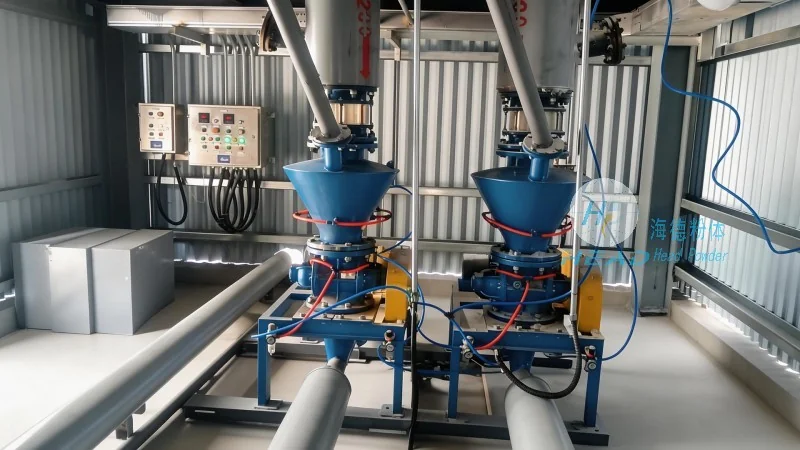
Design Considerations for Mica Sand Conveying
The design of a negative pressure pneumatic conveying system for mica sand involves several critical factors to ensure optimal performance and reliability. First, the material characteristics of mica sand must be carefully considered. Mica sand is typically a fine to medium-grained material with a specific density and flowability. These properties influence the selection of equipment components, such as the hopper design, airlock valves, and filter systems. The hopper must be designed to prevent material bridging and ensure consistent flow, which is crucial for maintaining system efficiency. Airlock valves are used to control the flow of material into the conveying line, preventing backflow and ensuring smooth operation. The filter system is essential for capturing dust and maintaining air quality, as mica sand can generate significant airborne particles during handling.
Key Components of the Conveying System
The negative pressure pneumatic conveying system for mica sand consists of several key components, each playing a vital role in the overall operation. The primary components include a vacuum pump, a conveying pipeline, a hopper with an airlock valve, and a filter system. The vacuum pump generates the necessary negative pressure to draw material from the hopper into the pipeline. The pipeline is typically made of stainless steel or other corrosion-resistant materials to handle the abrasive nature of mica sand and prevent material buildup. The hopper is equipped with an airlock valve that allows material to be discharged into the pipeline in controlled batches, preventing clogging and ensuring consistent flow. The filter system, often a baghouse or cartridge filter, captures the fine particles of mica sand and returns clean air to the system, maintaining air quality and preventing environmental contamination.

Operational Principles and Efficiency
The operational principle of the negative pressure pneumatic conveying system involves creating a vacuum in the pipeline, which draws material from the hopper into the conveying line. The material is then transported to the destination, such as a storage silo or processing unit, where it is discharged. The system operates continuously, with the vacuum pump maintaining the pressure differential required for material transport. The efficiency of the system is influenced by several factors, including the vacuum level, pipeline length, and material characteristics. Proper design and maintenance are essential to ensure that the system operates at peak efficiency, minimizing energy consumption and maximizing material throughput. The negative pressure system is particularly effective for short to medium-distance conveying, typically up to several hundred meters, and is suitable for handling large quantities of mica sand.

Advantages and Applications
Negative pressure pneumatic conveying systems offer several advantages for handling mica sand and other fine materials. These advantages include reduced material degradation, lower energy consumption compared to positive pressure systems, and improved safety by minimizing dust emissions. The system is also relatively simple to install and maintain, making it a cost-effective solution for many industrial applications. The negative pressure system is widely used in industries such as mining, construction, and manufacturing, where the handling of bulk materials is essential. For mica sand, the system is particularly useful in applications such as coating, filler production, and construction materials, where the material needs to be transported from storage to processing facilities without degradation or contamination.
Conclusion
In conclusion, the design of a negative pressure pneumatic conveying system for mica sand is a specialized engineering solution that addresses the unique challenges of handling fine, abrasive materials. By leveraging advanced technology and careful design, HeadPowder has developed a system that ensures efficient, reliable, and safe transport of mica sand. The system's components, operational principles, and advantages make it an ideal choice for industries requiring high-quality material handling solutions. As a leading provider of such systems, HeadPowder continues to innovate and improve its offerings to meet the evolving needs of its clients. The negative pressure pneumatic conveying system for mica sand exemplifies the company's commitment to excellence and its ability to deliver tailored solutions that enhance operational efficiency and productivity.