

Design of Magnetic Powder Negative Pressure Pneumatic Conveying Equipment
HeadPowder, a leading engineering firm based in Shandong, China, specializes in the design and development of advanced pneumatic conveying systems tailored for handling magnetic powders. This article provides an in-depth look at the design principles and technical considerations for a magnetic powder negative pressure pneumatic conveying system, highlighting the company's expertise in optimizing material transport efficiency while ensuring operational reliability.

Company Overview and Expertise
HeadPowder Engineering Co., Ltd. is a professional manufacturer and supplier of industrial conveying equipment, with a strong focus on magnetic powder handling solutions. The company is headquartered in Shandong, China, and has built a reputation for delivering high-quality, customized pneumatic conveying systems that meet the specific demands of various industrial applications. By leveraging years of experience in material handling technology, HeadPowder has developed a comprehensive range of solutions designed to enhance productivity and reduce operational costs for clients across different sectors.
Understanding Magnetic Powder Pneumatic Conveying
Magnetic powder, often used in industries such as magnetic separation, magnetic filtration, and magnetic material production, presents unique challenges when it comes to pneumatic transport. Unlike conventional bulk materials, magnetic powders require specialized handling to maintain their properties and prevent agglomeration or degradation during transport. The negative pressure pneumatic conveying system is an effective solution for this, as it uses a vacuum to draw material from the source to the destination, minimizing the risk of material spillage and ensuring a clean, controlled transport process.

Key Design Elements of the Negative Pressure System
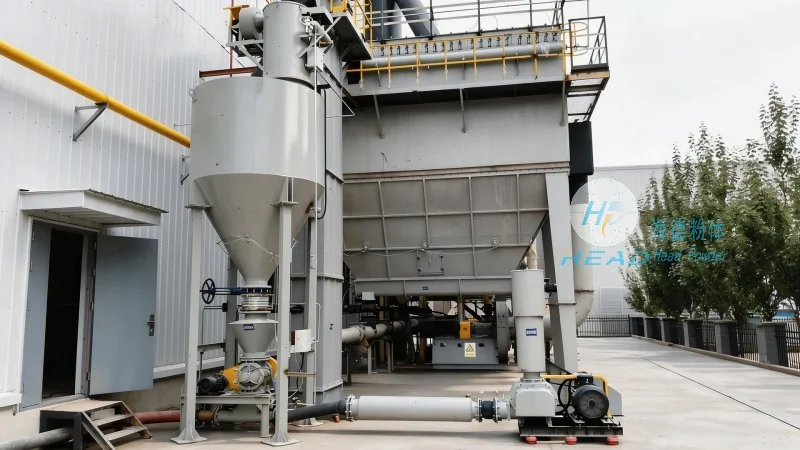
The design of a magnetic powder negative pressure pneumatic conveying system involves several critical components and considerations. The system typically includes a vacuum pump, a hopper or feeder for material loading, a pipeline network, and a receiver or discharge unit. The vacuum pump is responsible for creating the negative pressure that pulls the material through the system, while the feeder ensures a consistent and controlled flow of material into the pipeline. The pipeline design is crucial, as it must be constructed from materials that are compatible with magnetic powders and resistant to corrosion or wear. Additionally, the system incorporates magnetic separators or filters to prevent any magnetic particles from escaping or clogging the equipment.
Advantages of Negative Pressure Pneumatic Conveying
Compared to positive pressure systems, negative pressure pneumatic conveying offers several advantages when handling magnetic powders. The primary benefit is the reduced risk of material contamination and exposure to the environment, as the system operates under a vacuum, preventing dust and particles from escaping. This is particularly important for magnetic powders, which may be sensitive to moisture or air exposure. Additionally, negative pressure systems are generally more energy-efficient, as they require less power to operate compared to positive pressure systems. The controlled flow of material also helps to minimize material degradation and maintain the quality of the magnetic powder throughout the transport process.

Application Scenarios and Operational Benefits
The magnetic powder negative pressure pneumatic conveying system is widely used in various industrial applications, including the production of magnetic materials, magnetic separation processes, and the handling of magnetic additives in manufacturing. In these applications, the system provides a reliable and efficient means of transporting magnetic powders from storage to processing equipment, such as mixers, reactors, or magnetic separators. The operational benefits of this system include improved productivity, reduced labor costs, and enhanced safety, as the material is transported in a closed system, minimizing the risk of accidents or exposure to hazardous materials.
Customization and Integration with Existing Systems
HeadPowder understands that each industrial facility has unique requirements and constraints. Therefore, the company offers customized solutions tailored to the specific needs of clients. The magnetic powder negative pressure pneumatic conveying system can be integrated with existing equipment, such as hoppers, silos, or processing lines, to create a seamless material handling workflow. The system can also be designed to accommodate different material types, flow rates, and pipeline lengths, ensuring optimal performance and efficiency. By working closely with clients, HeadPowder engineers can develop a system that meets all operational and safety requirements, while maximizing the benefits of pneumatic conveying technology.
Conclusion and Future Outlook
The design of a magnetic powder negative pressure pneumatic conveying system is a complex process that requires a deep understanding of material properties, pneumatic principles, and industrial applications. HeadPowder Engineering Co., Ltd. has established itself as a leader in this field, providing innovative and reliable solutions that enhance the efficiency and safety of magnetic powder handling operations. As industrial demands for efficient material transport continue to grow, the company remains committed to developing advanced technologies and customized solutions that meet the evolving needs of the industry. With its headquarters in Shandong, China, HeadPowder continues to serve clients worldwide, delivering high-quality pneumatic conveying systems that drive productivity and success in various industrial sectors.